Tag: ai adoption

  • Multi-Modal AI Systems: Combining Text, Image, and Audio Understanding

    Multi-Modal AI Systems: Combining Text, Image, and Audio Understanding

    Introduction: AI That Sees, Hears, and Understands

    For decades, AI systems specialized in one thing at a time.

    • Text models processed language.
    • Vision models analyzed images.
    • Speech models handled audio.

    But humans don’t process the world in isolated channels. We combine what we see, hear, and read into a unified understanding.

    Now, AI is beginning to do the same.

    Welcome to the era of multi-modal AI — systems that combine text, image, audio, and sometimes video into a single integrated intelligence.

    This is one of the most important frontiers in AI research and architecture today.

    What Is Multi-Modal AI? (Simple Explanation)

    Multi-modal AI refers to artificial intelligence systems that can process and understand multiple types of data simultaneously.

    Instead of working with just text or just images, these systems combine:

    • Natural language
    • Visual information
    • Audio signals
    • Structured data
    • Sometimes sensor input

    In simple terms:

    Multi-modal AI systems learn from more than one type of input — just like humans do.

    Why Multi-Modal Learning Matters

    Real-world environments are multi-modal.

    Consider a few examples:

    • A doctor examines medical images and reads patient reports.
    • A self-driving car processes camera footage, radar signals, and GPS.
    • A customer support agent reads chat messages while listening to tone and reviewing screenshots.

    AI systems that rely on a single modality miss context.

    Multi-modal learning bridges that gap.

    How Multi-Modal AI Works (High-Level Architecture)

     How Multi-Modal AI Works

    At its core, multi-modal AI involves three major components:

    Modality-Specific Encoders

    Each data type has its own processing model:

    • Text → Transformer-based language model
    • Image → Vision Transformer (ViT) or CNN
    • Audio → Spectrogram encoder or audio transformer

    Each encoder converts input into embeddings (numerical representations).

    Fusion Layer

    The embeddings from each modality are combined.

    This can happen in three ways:

    Fusion TypeDescription
    Early FusionCombine raw features early
    Late FusionCombine model outputs
    Hybrid FusionMulti-stage combination

    Most frontier models use hybrid fusion.

    Joint Reasoning Layer

    After fusion, a shared reasoning engine processes the combined representation.

    This allows the model to:

    • Connect visual objects to text
    • Align speech tone with content
    • Detect cross-modal patterns

    Popular Multi-Modal AI Architectures

    Several frontier AI systems are built on multi-modal architectures.

    Examples:

    • CLIP (image + text alignment)
    • GPT-4 multimodal
    • Gemini (text, image, code, audio)
    • Flamingo (visual + language reasoning)
    • DALL·E (text → image generation)

    These systems demonstrate how combining modalities increases contextual intelligence.

    Real-World Applications of Multi-Modal AI

    Let’s explore where multi-modal AI is already making impact.

    Case Study 1: Medical Diagnosis AI

    Problem

    Doctors rely on:

    • Radiology images
    • Lab reports
    • Patient notes
    • Audio recordings of symptoms

    Traditional AI models analyze only one source.

    Multi-Modal Solution

    A hospital deployed a multi-modal AI system that:

    • Processes X-ray images
    • Reads clinical notes
    • Analyzes patient speech patterns
    • Integrates structured health data

    Results

    • 15–20% improvement in diagnostic accuracy
    • Faster triage decisions
    • Better risk detection for complex conditions

    Why It Worked

    The AI connected:

    • Visual anomalies in images
    • Symptom descriptions in text
    • Vocal stress signals in speech

    This multi-source reasoning improved outcomes.

    Case Study 2: Autonomous Driving Systems

    Autonomous Driving Systems

    Self-driving cars are classic multi-modal AI systems.

    Inputs:

    • Camera images
    • Radar signals
    • LiDAR data
    • GPS
    • Real-time map updates

    Architecture

    Each sensor has its own encoder.
    The system fuses these representations to:

    • Detect objects
    • Predict motion
    • Plan routes

    Key Insight

    If a camera view is blocked by fog, radar compensates.
    Multi-modal redundancy improves safety.

    Case Study 3: Customer Experience AI

    A major telecom company deployed multi-modal AI for customer service.

    Inputs:

    • Text chat logs
    • Voice call recordings
    • Account usage data
    • Screenshot uploads

    What the AI Did:

    • Analyzed customer tone (audio)
    • Understood complaint details (text)
    • Reviewed error screenshots (image)
    • Checked account patterns (data)

    Outcome:

    • 35% reduction in escalation rate
    • Faster resolution time
    • Higher customer satisfaction

    Why Multi-Modal AI Is More Powerful

    Single-modality models miss signals.

    Example:

    If someone says:

    “I’m fine.”

    Text alone suggests no issue.
    But voice tone might reveal stress.
    Facial expression might show anxiety.

    Multi-modal AI captures this deeper context.

    Technical Deep Dive: Multimodal Learning Strategies

    For AI developers, here’s how multi-modal systems are typically built.

    1️⃣ Shared Embedding Space

    Text and images are mapped into the same vector space.

    Example:

    • Image of a dog
    • Text “a brown dog running”

    The embeddings align closely.

    This is how models like CLIP work.

    2️⃣ Cross-Attention Mechanisms

    Transformers allow:

    • Text attending to image regions
    • Audio attending to text tokens

    Cross-attention enables deep multi-modal reasoning.

    3️⃣ Contrastive Learning

    Models learn by matching positive pairs and separating negatives.

    Example:

    • Correct caption-image pair → close
    • Incorrect pair → far apart

    4️⃣ Multi-Task Learning

    Train the model on multiple objectives:

    • Image classification
    • Text generation
    • Speech recognition

    This improves generalization.

    Challenges in Multi-Modal AI

    Despite the progress, multi-modal systems face serious challenges.

    1️⃣ Data Alignment

    Pairing text, images, and audio correctly is difficult.

    2️⃣ Compute Cost

    Multi-modal models require massive GPU resources.

    3️⃣ Modality Imbalance

    Some modalities dominate others.

    4️⃣ Missing Modality Problem

    What if one input type is absent?

    Developers must design architectures robust to missing data.

    The Future of Multi-Modal AI

    INFOGRAPHIC

    Multi-modal AI is evolving toward:

    • Real-time multi-sensory agents
    • AR/VR AI companions
    • Robotics with unified perception
    • Multi-modal scientific discovery assistants

    Eventually, most frontier AI systems will be inherently multi-modal.

    Multi-Modal AI vs AGI

    Some researchers argue that multi-modal learning is a stepping stone toward AGI (Artificial General Intelligence).

    Why?

    Because human cognition is inherently multi-modal.

    AI that sees, hears, reads, and reasons simultaneously moves closer to general intelligence.

    🧩 Key Takeaways

    • Multi-modal AI integrates text, image, and audio understanding.
    • Fusion architectures enable cross-modal reasoning.
    • Real-world impact spans healthcare, driving, and enterprise systems.
    • Multi-modal learning improves contextual understanding.
    • Future AI systems will likely be inherently multi-modal.

    AI becomes more intelligent when it understands the world from multiple perspectives.

  • Agentic AI: The Rise of Autonomous Digital Workers

    Agentic AI: The Rise of Autonomous Digital Workers

    Introduction: From Assistive AI to Agentic AI

    For years, AI has played a supporting role — answering questions, recommending products, or automating simple tasks.
    But something fundamental is changing.

    We are now entering the era of Agentic AI — AI systems that don’t just respond to instructions, but set goals, plan actions, use tools, and execute tasks autonomously.

    These systems behave less like chatbots and more like digital workers.

    Instead of:

    “Tell me the answer.”

    Agentic AI works like:

    “Here’s the goal. Figure out how to achieve it.”

    This shift has profound implications for AI automation, productivity, and the future of work.

     What Is Agentic AI? (Simple Explanation)

    Agentic AI refers to AI systems designed as autonomous agents — capable of:

    • Understanding goals
    • Planning multi-step actions
    • Using tools (APIs, code, browsers, databases)
    • Making decisions based on feedback
    • Iterating until a goal is achieved

    In short:

    Agentic AI systems act, not just respond.

    They operate continuously, adapt to new information, and can manage complex workflows without constant human supervision.

     Agentic AI vs Traditional AI

    AspectTraditional AIAgentic AI
    RoleReactiveProactive
    ControlHuman-drivenGoal-driven
    Task TypeSingle-stepMulti-step
    Tool UseLimitedExtensive
    AutonomyLowHigh
    Feedback LoopMinimalContinuous

    Traditional AI answers questions.
    Agentic AI gets things done.

     How Agentic AI Systems Work

    Agentic AI

    An agentic AI system typically follows a loop:

    1. Goal Definition
      A high-level objective is provided.
    2. Planning
      The AI breaks the goal into steps.
    3. Tool Selection
      Chooses tools (APIs, databases, code execution).
    4. Execution
      Performs actions autonomously.
    5. Observation
      Evaluates results.
    6. Iteration
      Adjusts plan until success or termination.

    This is often called the agent loop.

     Core Components of Agentic AI

    1. Reasoning Engine

    Handles decision-making and planning logic.

    2. Memory System

    Stores context, past actions, and long-term knowledge.

    3. Tool Interface

    Allows the agent to interact with external systems.

    4. Feedback Mechanism

    Evaluates success and adapts behavior.

    5. Autonomy Guardrails

    Constraints to prevent harmful or inefficient actions.

     Why Agentic AI Is Gaining Momentum Now

    Several trends are converging:

    1. Advanced Large Language Models

    LLMs can now reason, plan, and summarize effectively.

    2. Tool-Calling Capabilities

    AI can use APIs, code interpreters, browsers, and databases.

    3. Cloud & API Ecosystems

    Everything is accessible programmatically.

    4. Enterprise Automation Demand

    Businesses want systems that operate 24/7.

    5. Cost Pressure

    Autonomous agents reduce operational overhead.

    Together, these forces make agentic AI practical — not theoretical.

     Autonomous Agents in the Real World

     Autonomous Agents in the Real World

    Let’s look at where agentic AI is already delivering value.

     Case Study 1: AI Agents for Market Research

    Problem

    Market research requires:

    • Data collection
    • Competitor analysis
    • Report synthesis

    This is slow and labor-intensive.

    Agentic AI Solution

    An autonomous research agent:

    • Scrapes public data
    • Analyzes trends
    • Summarizes insights
    • Generates reports

    Outcome

    • Research time reduced by 70%
    • Continuous market monitoring
    • Faster strategic decisions

    Key Insight:
    The agent works continuously — not just when prompted.

     Case Study 2: Autonomous Software Development Agents

    Problem

    Developers spend time on:

    • Debugging
    • Testing
    • Documentation
    • Code refactoring

    Agentic AI Solution

    AI agents:

    • Analyze codebases
    • Identify bugs
    • Write tests
    • Suggest improvements
    • Open pull requests

    Outcome

    • Faster development cycles
    • Reduced human fatigue
    • Higher code quality

    This marks the rise of AI junior developers.

     Case Study 3: Enterprise Workflow Automation

    Problem

    Enterprise workflows span multiple systems:

    • CRM
    • ERP
    • Analytics dashboards
    • Emails

    Manual orchestration causes delays.

    Agentic AI Solution

    Autonomous agents:

    • Monitor KPIs
    • Trigger actions
    • Send alerts
    • Update systems
    • Escalate exceptions

    Outcome

    • End-to-end automation
    • Real-time decision-making
    • Reduced operational cost

     Agentic AI in Scientific Research

    Researchers are using autonomous agents to:

    • Run experiments
    • Analyze results
    • Adjust hypotheses
    • Explore new ideas

    In some labs, AI agents already function as research assistants, accelerating discovery cycles.

     Challenges & Risks of Agentic AI

    Despite the promise, agentic AI introduces new risks.

    1. Loss of Human Oversight

    Highly autonomous systems may act in unexpected ways.

    2. Goal Misalignment

    Poorly defined objectives can lead to harmful outcomes.

    3. Security Risks

    Agents with tool access can cause damage if compromised.

    4. Ethical Concerns

    Who is responsible for autonomous decisions?

     Designing Safe & Responsible Agentic AI

    Best practices include:

    • Clear goal constraints
    • Permissioned tool access
    • Human-in-the-loop checkpoints
    • Audit logs
    • Kill-switch mechanisms

    Agentic AI should be autonomous — not uncontrolled.

     Agentic AI and the Future of Work

     Agentic AI and the Future of Work

    Agentic AI doesn’t eliminate jobs — it changes roles.

    Humans Shift Toward:

    • Strategy
    • Oversight
    • Creativity
    • Ethics
    • System design

    AI Takes Over:

    • Repetitive tasks
    • Monitoring
    • Execution
    • Optimization

    The result: Human-AI collaboration at scale.

     What Comes Next?

    Future developments include:

    • Multi-agent systems
    • AI-managed organizations
    • Autonomous DAOs
    • Self-optimizing companies
    • AI-driven economies

    Agentic AI is not just a tool — it’s a new operational paradigm.

     Key Takeaways

    • Agentic AI represents a shift from reactive to autonomous AI
    • Autonomous agents can plan, act, and iterate independently
    • Real-world use cases already exist across research, software, and enterprise
    • Governance and safety are essential
    • Agentic AI will redefine productivity and work
  • AI for Creative Industries — Cohort 2 (Part B) | Tesseract Academy

    AI for Creative Industries — Cohort 2 (Part B) | Tesseract Academy

    Short summary: Tesseract Academy’s AI for Creative Industries programme (Cohort 2 — Part B) is a fully funded upskilling course for creative professionals in the UK. Backed by Innovate UK and Bridge AI, the programme combines online modules, group calls and a project track that can lead to an advanced certificate — all designed to help designers, writers, filmmakers, musicians and other creatives use AI productively and ethically in their work.

    Why this programme matters now

    AI is reshaping creative work — from writing and image-making to music and film. As speakers in the launch webinar explained, generative tools and intelligent agents are no longer niche: adoption among creative professionals is accelerating, and new markets and job roles are emerging. Tesseract Academy’s programme is built to help creatives adapt: not by replacing what you do, but by making your work faster, more ambitious and more marketable.

    The programme’s core idea: learn practical AI skills, build an AI roadmap for your career, and produce work that proves those skills.

    Who should apply

    This programme targets creative professionals who are:

    • Based in the UK, and
    • Working (or intending to work) in the creative industries — for example: graphic designers, content writers, social media managers, illustrators, filmmakers, screenwriters, musicians, translators, creative directors, and related roles.

    It’s suitable for people who want to upskill for immediate workplace impact as well as those who want to build an AI-enabled portfolio or launch a creative practice using AI.

    Funding and eligibility

    The programme is fully funded through Innovate UK and Bridge AI — meaning it’s free for eligible participants. To qualify, you must be a UK resident and a professional in the creative sector. Tesseract Academy verifies applicants via a short registration process (the team also accepts HubSpot submissions when the main site is overloaded).

    Structure: how the course works

    The programme is flexible and divided into three pillars:

    1. Online content (LMS): Self-paced modules hosted on Tesseract Academy’s learning platform. Modules include recorded lessons, readings and practical exercises. Core modules plus a rich selection of electives let you pick what’s most relevant to your practice.
    2. Group calls & webinars: Regular cohort calls (weekly or biweekly depending on demand) provide live teaching, Q&A, and peer feedback. There are also occasional webinars and optional live workshops — both online and in-person when feasible.
    3. Project work (certificate track): An optional but recommended project that functions like a mini capstone. Completing and submitting a project is required for the advanced certificate. Projects let you demonstrate tangible outcomes — ideal for portfolios or internal business improvements.

    What you’ll learn (sample topics)

    The programme mixes practical tool training with strategy and career planning. Topics covered include:

    • Introduction to AI for creative leaders
    • AI roadmapping for careers and businesses
    • Prompt engineering and generative model workflows (text, image, audio, video)
    • Creative use-cases across music, film, brand identity, visual editing and more
    • Ethics, copyright, and responsible use of generative tools
    • Building an AI-enabled portfolio and demonstrating impact
    • Advanced topics: agent-based automation, creative pipelines, and productising creative output

    Instructors include industry practitioners and academics; the webinar host highlighted contributions from professors and domain experts.

    Time commitment & formats

    Tesseract Academy keeps the content flexible so you can choose your level of engagement:

    • Core modules: roughly 3–10 hours depending on depth (a skim through core lessons may take 3–4 hours; a thorough pass can take up to ~10 hours).
    • Electives: typically 5–10 hours each.
    • Project work (advanced certificate): highly variable — expect ~20–30+ hours depending on ambition.

    Cohorts typically run over about three months, but extensions can be requested for certificate submissions if you need more time.

    Certification tiers

    The programme offers tiered recognition:

    • Basic completion: Finish core modules and receive a course completion acknowledgement.
    • Advanced certificate: Complete all required modules and submit a project demonstrating applied work. This track is good for career proof (portfolio, employer evidence, or client pitches).

    Certificates are optional but encouraged for those who want tangible proof of skills.

    Community: Slack & WhatsApp

    Participants are invited to join a cohort community hosted on Slack and WhatsApp. These groups are used for coordination, sharing resources, event announcements and ongoing peer support. After registration, expect an email with invites to these channels.

    Practical notes from the webinar (registration & troubleshooting)

    • The team experienced high traffic during the live launch which temporarily overloaded the website. If the site fails during registration, use the provided HubSpot form — submissions through HubSpot are monitored and accepted.
    • The team committed to follow up via email and to re-send links once server load stabilises. If you register via HubSpot, they’ll confirm and manually process entries if needed.
    • If you run into issues, the webinar host advised contacting the programme’s support or waiting for the follow-up email with alternative links.

    Why creatives benefit from this programme

    • Future-proof your practice: AI skills are becoming expected in many creative roles. This programme helps you adapt rather than change careers.
    • Practical, project-led learning: The project track means you leave with concrete work you can show clients or employers.
    • Flexible & funded: Being fully funded lowers the barrier to entry, while flexible timing accommodates working professionals.
    • Community & mentorship: Live calls, Slack/WhatsApp groups and expert tutors create a supportive learning environment.

    Quick FAQs

    Q: Is attendance at live calls compulsory?
    A: No — live meetings are optional. They’re there to help, but the course is structured for flexible, self-paced learning.

    Q: How long does the programme run?
    A: Cohort durations are typically around three months, with varying commitment depending on your chosen pathway.

    Q: Do I need technical experience?
    A: No specialised technical background is required. The course serves creative professionals across a range of technical comfort levels.

    Q: What if the registration link is down?
    A: Submit via the HubSpot form provided during the webinar — the Tesseract Academy team monitors HubSpot and will confirm your registration.


    Ready to apply?

    If you’re a UK-based creative professional and want to use AI to increase your impact and marketability, this programme is a strong, practical entry point. Look out for the follow-up email from Tesseract Academy for the registration link and community invites. If the site is unavailable during your attempt, use the HubSpot form option to secure your place.

  • What Are Foundation Models, and How Are They Changing AI Development?

    What Are Foundation Models, and How Are They Changing AI Development?

    Artificial intelligence (AI) has seen many waves of progress over the past few decades, but few developments have been as transformative as foundation models. These powerful AI systems have become the building blocks for a new generation of applications, tools, and platforms that are reshaping how we interact with technology. Whether it’s conversational chatbots, image generation tools, or advanced business solutions, foundation models are quietly powering much of today’s innovation. But what exactly are they, and why are they creating such a shift in AI development? Let’s explore this in detail.

    Understanding the Basics: What Are Foundation Models?

    To start with, think of foundation models as massive “general-purpose brains” for computers. Traditionally, AI models were designed for very specific tasks. For example, one model might be trained only to recognize cats in images, while another could analyze credit card transactions for fraud. Each model had a narrow purpose, and developers needed to build new ones from scratch whenever they wanted a different solution. This approach worked but was costly, time-consuming, and limited in scope.

    Foundation models changed that. Instead of being trained for a single task, these models are trained on enormous datasets that cover a wide range of information. They are not specialists; they are generalists. They learn patterns in text, images, audio, or other forms of data on a very large scale. Once trained, they can then be adapted—or “fine-tuned”—to handle a wide variety of applications. In other words, a foundation model provides the “foundation” for building many different AI systems without starting from zero each time.

    For example, OpenAI’s GPT models (like GPT-4 and GPT-5) are foundation models trained on vast amounts of text. These models can answer questions, write essays, translate languages, generate code, and even simulate conversation. Similarly, foundation models like DALL·E or Stable Diffusion work with images, enabling everything from creating digital artwork to designing marketing campaigns.


    How They Differ From Traditional AI Models

    Before foundation models, AI development looked like building many small tools with limited functions. Each one had to be carefully crafted and trained for a specific goal. Imagine trying to build a set of machines where one machine only makes coffee, another only makes tea, and another only makes smoothies. Every new beverage requires designing a whole new machine. That was how traditional AI worked.

    Now picture having a single smart machine that can make coffee, tea, smoothies, and much more—depending on what instructions you give it. That’s the essence of a foundation model. It learns so broadly during training that it can adapt to many tasks without needing to be redesigned from scratch. Developers save time, companies save money, and innovation accelerates.

    This shift is why experts often describe foundation models as a turning point in AI. They are not just incremental improvements; they represent a new paradigm where one powerful model can support endless applications.


    Why Are Foundation Models So Powerful?

    There are several reasons why foundation models are seen as game-changers in the AI world.

    First, scale matters. These models are trained on unprecedented amounts of data, ranging from books and articles to websites and code libraries. The sheer size of the dataset allows them to capture patterns and relationships that smaller models would miss. As a result, they can generalize knowledge across many areas instead of being locked into a single narrow domain.

    Next, transferability makes them valuable. Once a foundation model is built, it can be fine-tuned for specific tasks with relatively little effort. For example, a healthcare company might fine-tune a language-based foundation model to analyze medical records, while a finance company might adapt the same model to detect fraud in transaction data. The base model remains the same, but the applications multiply.

    Finally, efficiency comes into play. Training a foundation model from scratch requires immense computing power and resources, but once the model exists, it can be reused by countless organizations. This democratizes access to powerful AI, allowing even smaller businesses to leverage cutting-edge tools without massive investments.

    traditional AI model VS foundation AI model

    Real-World Examples of Foundation Models in Action

    To make this idea more concrete, let’s look at how foundation models are being applied in the real world.

    In education, foundation models power tutoring systems that can explain math concepts, help with essay writing, or provide instant language translation. Instead of separate tools for each subject, one model can handle them all. Similarly, staying updated on changes in education, like the AP courses & exams changing 2025, is essential for students and educators preparing for the future.

    In business, companies use foundation models for customer service chatbots, content creation, market analysis, and even code generation. For instance, GitHub’s Copilot, which helps developers write code faster, is built on a foundation model trained on large repositories of programming languages.

    In healthcare, researchers are exploring ways foundation models can analyze patient records, predict disease risks, and even assist in medical image interpretation. While challenges like data privacy remain, the potential benefits are huge.

    Even in creative industries, artists and designers are embracing image-based foundation models like MidJourney or Stable Diffusion to generate artwork, logos, or marketing visuals. These tools make creativity more accessible by lowering the barriers to professional-level design.


    The Changing Landscape of AI Development

    Foundation models don’t just change what AI can do; they change how AI is developed. Before, developers had to collect data, design algorithms, and train models from scratch. This process was expensive, often out of reach for startups or small research groups.

    Now, many developers can build on existing foundation models. Instead of reinventing the wheel, they can focus on tailoring the model to their needs. This accelerates development cycles and fosters innovation. A startup building a chatbot no longer needs millions of dollars to train a language model; they can fine-tune an existing one and launch much faster.

    This shift also changes the skills needed in AI development. While expertise in algorithms and training still matters, more emphasis is placed on prompt engineering, fine-tuning, and responsible deployment. The “raw science” of building a model from scratch is giving way to a new focus on creativity, ethics, and domain expertise.


    Opportunities and Benefits of Foundation Models

    Opportunities and Benefits of Foundation Models

    The rise of foundation models opens doors to opportunities that seemed unimaginable just a few years ago.

    One major benefit is accessibility. Businesses of all sizes can now use powerful AI tools without having to develop them internally. This levels the playing field and sparks innovation across industries.

    Another opportunity lies in productivity. By automating repetitive tasks and offering intelligent assistance, foundation models free humans to focus on higher-value work. For example, a legal firm could use a model to draft documents, allowing lawyers to spend more time on strategy and client interactions.

    There’s also an element of creativity. With tools that can generate images, music, or stories, people are experimenting with new forms of expression. Some artists see AI as a collaborator rather than a competitor, helping them push creative boundaries.


    Challenges and Risks to Consider

    Of course, foundation models are not without their challenges. As powerful as they are, they also raise concerns that society must address.

    One key issue is bias. Since these models are trained on vast datasets collected from the internet, they can inherit the same biases present in the data. This can lead to unfair or harmful outputs if not carefully managed.

    Another challenge is misuse. Tools that generate realistic text, images, or videos can be exploited for disinformation, deepfakes, or scams. Ensuring responsible use of these technologies is critical.

    Then there’s the problem of resource intensity. Training foundation models consumes enormous amounts of computing power and energy. This raises questions about sustainability and environmental impact.

    Finally, ethical concerns such as data privacy, intellectual property, and accountability come into play. If an AI-generated artwork resembles a copyrighted piece, who owns it? If an AI makes a harmful recommendation, who is responsible?


    The Future of Foundation Models

    Looking ahead, it’s clear that foundation models will continue shaping the AI landscape for years to come. Researchers are working on ways to make them smaller, more efficient, and more aligned with human values. We may soon see specialized foundation models trained with safety and fairness at the core.

    For businesses and individuals, this means even greater access to advanced AI capabilities. Imagine a world where small schools have their own AI tutors, local clinics use AI to improve care, and entrepreneurs launch products built on AI without needing a large tech team. Foundation models make this vision realistic.

    At the same time, policymakers, researchers, and companies will need to collaborate to set guidelines and safeguards. The technology is too powerful to be left unchecked, and its benefits will only be sustainable if its risks are managed responsibly.


    Conclusion: A New Era of AI Development

    In summary, foundation models are large-scale AI systems that serve as flexible building blocks for countless applications. They represent a shift from task-specific tools to general-purpose systems capable of adaptation and creativity. By making AI more accessible, efficient, and versatile, they are driving a new wave of innovation across industries.

    However, with great power comes great responsibility. As foundation models become central to AI development, society must navigate challenges like bias, misuse, and sustainability. Balancing opportunity with responsibility will be key to ensuring these models truly serve humanity.

    One thing is clear: foundation models are not just a technological trend—they mark the beginning of a new era. From the apps we use daily to the systems shaping global industries, they are quietly transforming how AI is built, shared, and experienced. The journey has just begun, and the possibilities are as vast as the data these models are trained on.

    Frequently Asked Questions (FAQs) About Foundation Models

    1. What exactly are foundation models in AI?
    Foundation models are large-scale AI systems trained on massive amounts of data. Instead of being designed for one specific task, they are flexible and can be adapted to many applications such as text generation, image creation, coding assistance, and more.

    2. How are foundation models different from traditional AI models?
    Traditional AI models are task-specific, meaning each one is built for a single job like detecting spam or recognizing faces. Foundation models, on the other hand, are general-purpose and can be fine-tuned for multiple tasks without starting from scratch.

    3. Why are foundation models so important in AI development?
    They save time, reduce costs, and open up opportunities for innovation. Developers don’t need to build new models for every task; they can adapt an existing foundation model. This makes AI more accessible to businesses, researchers, and even small startups.

    4. Can foundation models be used in different industries?
    Yes, they are already being used in healthcare (medical analysis), education (tutoring systems), business (customer support, market insights), and creative industries (art and design). Their flexibility makes them suitable for almost any domain.

    5. What are the risks of using foundation models?
    The main concerns are bias (inherited from the training data), misuse (like creating deepfakes), high resource consumption, and ethical issues around ownership, privacy, and accountability. Responsible usage and regulations are crucial.

    6. Will foundation models replace human jobs?
    They won’t completely replace humans but will change how people work. Many routine tasks may be automated, but humans will still be needed for decision-making, creativity, and ethical oversight.

    7. What is the future of foundation models?
    The future lies in making these models more efficient, ethical, and aligned with human needs. Expect to see smaller, more specialized foundation models designed to be safer, more sustainable, and easier for businesses to use.

    8. Can small companies or individuals use foundation models?
    Yes. While building one from scratch requires enormous resources, many existing models are available through APIs and platforms. This allows smaller businesses to integrate advanced AI without major costs.

  • The Tesseract Academy October Newsletter: Synergizing AI and Culture- Building Readiness for the Future

    The Tesseract Academy October Newsletter: Synergizing AI and Culture- Building Readiness for the Future

    A Foreword By 📈 Dr Stylianos Kampakis, CStat 📊

    “Welcome to this month’s newsletter, where we explore the dynamic intersection of AI Readiness and Organizational Culture. In our rapidly evolving tech landscape, AI’s profound impact on businesses and organizations is undeniable. Beyond adopting AI technology, nurturing the right organizational culture is key for success.

    This month’s highlights include a seminar by Dr. Clif Lewis, an expert in organizational culture, discussing “Models for Understanding Organizational Culture” and its role in AI readiness as well as a recently published report on this topic, revealing intriguing insights and trends. We’ve also shared with you an informative infographic outlining the key stages of AI adoption and maturity to enhance your understanding of AI’s role in organizations.

    As champions of knowledge and innovation, we’re thrilled to announce an upcoming event in London: “The Business of AI: Data Science for CEOs, Managers, and Professionals. (7th November)” Join us for transformative insights, networking, and strategies to leverage AI for business success.

    As always The Tesseract Academy is always happy to support you in your AI and Web3.0 journey. We hope you enjoy this month’s stories!”

    Unlocking AI’s Potential: The Crucial Role of Organizational Culture in AI Readiness

    AI readiness and organizational culture are deeply intertwined aspects that significantly impact the successful integration of artificial intelligence within a company. AI readiness encompasses not only technological infrastructure and data capabilities but also the willingness and ability of an organization to adapt to AI-driven changes. A forward-thinking and adaptable organizational culture is essential for embracing AI effectively.

    Such a culture encourages curiosity, continuous learning, and a willingness to experiment with new AI technologies. It fosters collaboration across teams and promotes data-driven decision-making, all of which are vital in harnessing AI’s potential. Moreover, a culture that values transparency, ethical considerations, and responsible AI practices ensures that AI adoption aligns with the organization’s values and long-term objectives. In essence, AI readiness and organizational culture are symbiotic, with the latter serving as the bedrock upon which the former can thrive and drive meaningful transformation.

    This is why we recently conducted a research report to assess the perceived importance of AI adoption in organizations and its correlation with organizational culture. you can find the report below.

    If you need help in this particular area please get in touch.

    The Tesseract Academy Report: AI Readiness and Organisational Culture

    This survey aimed to gather insights into the attitudes and expectations of respondents regarding AI adoption within their organizations and industries.

    We asked 35 experts on their opinions and the results were very intriguing. The profession of the respondents included: Business Developer, COO, Chief Strategy Officer,Data Engineer, Founder, Jnr Data Analyst,PHD students, Professors, Project Manager and Senior partner.

    As you can see from above one of the interesting aspects of the report was that on a scale of 1 to 5, with 1 being not ready and 5 being very ready, 42% of respondents rated that their organisations readiness to adopt AI as 3. This indicates a moderate level of readiness.

    However, when asked again about the importance of AI adoption for their organization, nearly 75% of respondents chose a rating of 4 or 5, demonstrating a substantial shift towards perceiving AI and data science as crucial for their organizations.

    You can read the full report here.

    Seminar: Models for Understanding Organisational Culture

    This is a recording of the seminar held by the Tesseract Academy and Dr Clif Lewis. Dr Lewis removed the mystery from organisational culture and provided models and frameworks for analysing and interpreting organisational culture like you would any other aspect of your Tech firm.

    Understanding these models and frameworks helps make sense of organisational culture as an instrument for business improvement.

    Upcoming Event: The Business of AI: Data science for CEOs, managers and professionals (Tuesday, 7 November)

    Unleash the power of Artificial Intelligence (AI) in your business. This event equips leaders and professionals with the knowledge to leverage AI for growth, efficiency, and competitive edge.

    This event is designed to help CEOs, managers, and professionals learn how to leverage AI to drive growth, improve efficiencies, and gain a competitive advantage.

    Topics covered include:

    • The role of data science in business strategy
    • The basics of AI and machine learning for businesses
    • Best practices for building an AI team
    • How to get started with AI in your organisation

    Join us for an engaging and informative day of learning, networking, and inspiration!

    Grab your ticket here.

    Data science, AI, Blockchain and Tokenomics

    All organisations will need to adopt AI if they are going to thrive in the next few years. We are masters of AI transformation, and we have created a risk-free process for companies that want to get started with AI.

    1. Precise business valuation and ROI.
    2. We create a custom, revolutionary strategy, aligned with your unique goals.
    3. We execute it, promising a seamless, safe transition to AI.
    4. We provide a service guarantee, or a full refund if you are not satisfied.

    If this piques your interest, please let us know.

    Happy to share our case studies with you

  • The Tesseract Academy September Newsletter: AI For Startups: Navigating the Future 🤖

    The Tesseract Academy September Newsletter: AI For Startups: Navigating the Future 🤖

    A Foreword By 📈 Dr Stylianos Kampakis, CStat 📊

    “This month’s newsletter is about AI for startups! AI is revolutionizing the global landscape. To remain competitive, startups must adapt to this change. Ensuring a solid business model that effectively integrates AI is crucial to their success. We have a webinar, and a framework to support founders in their AI journey.

    Also, in this month’s newsletter we talk about our upcoming AI ethics webinar, as well as the tokenomics webinar conducted by Dr Hala Faissal, one of Tesseract Academy’s tokenomics experts. The Tesseract Academy is always happy to support you in your AI and Web3.0 journey. We hope you enjoy this month’s stories!”

    AI is revolutionizing the global landscape. To remain competitive, startups must adapt to this change. Ensuring a solid business model that effectively integrates AI is crucial to their success.

    Startups embarking on AI implementation face a myriad of challenges such as:

    • 🌐 Misaligned Goals: Integration of AI can overshadow actual business needs, leading to resource wastage.
    • 📊 Quality Data Overlooked: High-quality data is vital; lacking it leads to inaccurate or biased AI outcomes.
    • 💰 Financial Strain: AI development costs are substantial, impacting budget considerations.
    • 🧠 Talent Shortage: Fierce competition for AI experts makes recruitment and retention difficult.
    • 🌐 Ethical Dilemmas: Societal biases and ethical concerns can arise, raising issues of fairness.
    • 🔒 Security Risks: Potential vulnerabilities add to the complexity and hazards of AI adoption.

    However, for startups that navigate these challenges successfully, AI offers immense potential. Harnessing AI effectively can pave the way for creating unique intellectual property, allowing startups to carve out distinctive niches, optimize operations, and drive innovation in ways previously unimaginable.

    We have put together a free webinar below to help you out!

    Webinar: What startups need to know about AI

    Are you a trailblazing startup ready to navigate the transformative world of Artificial Intelligence? Join our upcoming webinar, “What Startups Need to Know About AI” where we demystify the power of AI and help you leverage its limitless potential.

    This insightful free webinar is specially designed to address the pressing questions startups often have about AI:

    • What exactly is AI?
    • How can it be leveraged within a budding business?
    • What are its potential pitfalls, and how can they be avoided?

    You can watch the webinar here.

    Remember, building an AI startup is a marathon, not a sprint. Stay agile, learn from challenges, and celebrate your successes along the way! 🎉🚀🤖

    How Can We Help You? Join The Tesseract Academy’s AI for Startups Program! 🚀

    So, why choose us?

    🎯 Game-changing program tailored for startups & entrepreneurs.

    📈 Boost your company’s valuation & competitiveness with AI & data science.

    ⏱️ 6 weeks or less to transform your business by building & implementing an AI strategy (or get your money back).

    🤖 External data science team without the cost & time.

    🌟 Unlock the power of data science for product strategy.

    Check out the testimonial below!

    Find out more here or book a free call with a data expert.

    Also check out the free framework below which you’ll find useful.

    The Data Product Framework For Startups

    In today’s data-driven world, startups are increasingly leveraging data to drive decision-making and create innovative products and services. The Data Product Framework offers a structured approach for startups to harness the power of data effectively.

    The following framework presents a simple 3-step process that can help you clarify how to make the most out of your data strategy and your product strategy

    You can access the full framework here.

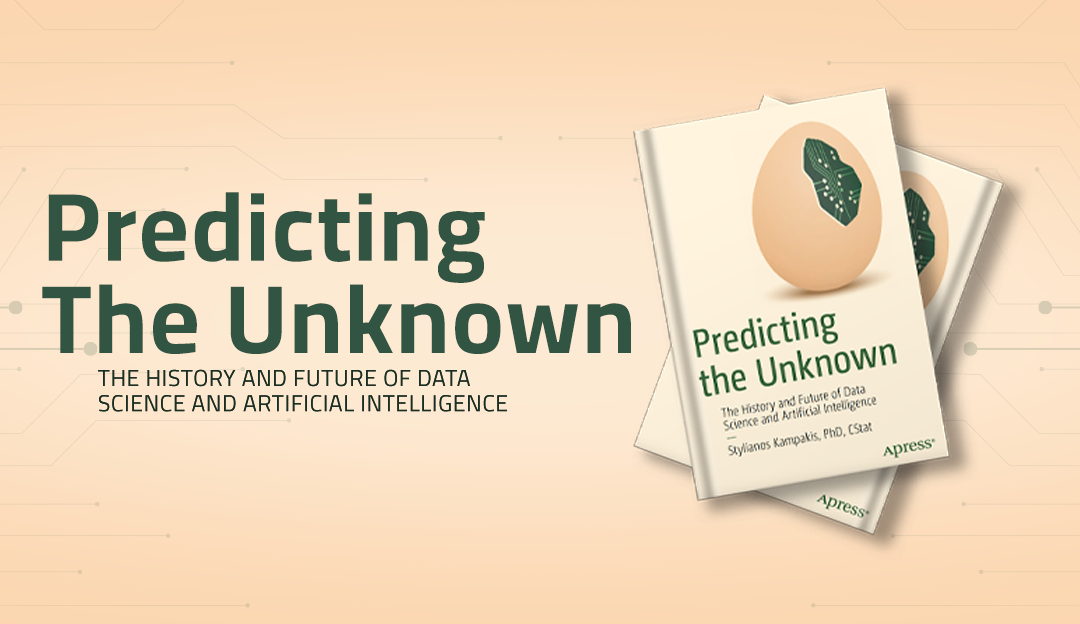
    Book Presentation: Predicting The Unknown -The History of AI & Data Science

    As the world increasingly embraces the data-driven era, uncertainty becomes an inevitable companion in the quest for knowledge and understanding. It is in the face of the unknown that true innovation flourishes, and ‘Predicting the Unknown‘ aims to be your guiding light in navigating these uncharted waters.

    In this book, you will embark on an extraordinary journey that will lead you through the intricate interplay between data science, machine learning, and AI. We will venture into the depths of data, exploring its hidden stories and patterns, and how it empowers us to make informed decisions in a complex world.

    Our CEO Dr. Stylianos Kampakis and author of the book recently held an event to discuss his latest release. You can watch it below:

    Get in touch if you’d like a free copy of the book.

    Basics Of Tokenomics with Dr. Hala Faissal

    We recently also held an event on Tokenomics which was a great success!

    Join Dr. Hala Faissal as she delves into the foundational principles of tokenomics, elucidating the intricacies of cryptocurrency tokens and their impact on the digital economy. Whether you’re a beginner or seeking a refresher, this video provides essential insights to navigate the world of tokenomics with confidence.

    Check it out below!

    Upcoming Event: AI Ethics for Decision Makers (6th Sep 2023)

    Join us at “AI Ethics for Decision Makers,” an exclusive online event tailored for leaders, policymakers, and professionals at the forefront of technological innovation.

    As AI continues to reshape our world, understanding the ethical implications is paramount. This engaging and interactive session will delve into the core principles of AI ethics, including fairness, transparency, accountability, and privacy.

    About the speaker:

    Raluca Crisan has 10+ years of experience in data science working with a variety of clients (UK retailers, banks & telco companies). She is Co-founder & CTO of Etiq, ML testing and data validation company and has a particular specialism in algorithmic bias.

    Grab your free tickets here.

  • Book Presentation: Predicting The Unknown -The History of AI & Data Science

    Book Presentation: Predicting The Unknown -The History of AI & Data Science

    It is with immense joy and a sense of accomplishment that I introduce you to “Predicting the Unknown – The History of AI and Data Science” – a book that has been a labor of love, passion, and unwavering dedication. As the author, I am honored to share this work with all of you, and I couldn’t be prouder of this moment.

    ‘Predicting the Unknown’ is more than just a book to me; it is the culmination of years of exploration, research, and a deep fascination with the enthralling world of data science, machine learning, and artificial intelligence. In these pages, I endeavor to unravel the enigmatic mysteries of uncertainty and offer a glimpse into the boundless possibilities that these cutting-edge fields hold for our future.

    As the world increasingly embraces the data-driven era, uncertainty becomes an inevitable companion in the quest for knowledge and understanding. It is in the face of the unknown that true innovation flourishes, and ‘Predicting the Unknown’ aims to be your guiding light in navigating these uncharted waters.

    In this book, you will embark on an extraordinary journey that will lead you through the intricate interplay between data science, machine learning, and AI. We will venture into the depths of data, exploring its hidden stories and patterns, and how it empowers us to make informed decisions in a complex world.

    Machine learning, the dynamic force behind modern-day breakthroughs, has the power to uncover hidden insights from data and make predictions that transform industries and revolutionize lives. In ‘Predicting the Unknown,’ we will delve into the fascinating world of machine learning algorithms and understand their immense potential to shape the future.

    Artificial intelligence, the frontier of innovation, has ceaselessly challenged the boundaries of human achievement. As we explore AI’s impact on society and daily life, we shall gain a deeper appreciation for its transformative capabilities and the ethical considerations that accompany its rapid advancement.

    This book is for the curious souls, the knowledge seekers, the dreamers, and the doers. Whether you are an aspiring data scientist, a seasoned AI enthusiast, or simply someone eager to grasp the profound impact of these technologies on our world, ‘Predicting the Unknown’ promises to enlighten and inspire.

    As you flip through the pages of ‘Predicting the Unknown,’ I hope you find yourself captivated by the possibilities that lie ahead. May this book ignite your curiosity, challenge your perspectives, and equip you with the tools to navigate the uncertainties of tomorrow with confidence and foresight.

    I’d also like to thank everyone who attended my recent book event which you can watch below.

    Thank you for joining me on this enlightening journey, and I sincerely hope “Predicting the Unknown – The History of AI and Data Science” becomes a cherished companion in your quest for knowledge and understanding.

    Here’s to embracing the future with open arms and to unlocking the secrets of uncertainty together!

  • The Tesseract Academy July Newsletter: Large Language Models and AI Transformation 🤖 (Free LLMs Advisory Consultation Offer)

    The Tesseract Academy July Newsletter: Large Language Models and AI Transformation 🤖 (Free LLMs Advisory Consultation Offer)

    The Tesseract Academy is helping decision makers and companies get ahead of the curve through AI and Web3.0. In this month’s newsletter we discuss our survey on LLMs and their impact on coding, our special offer for startups, as well as our in-person event in London for leaders interested in AI!

    🌟 LLMs, such as GPT-4, are revolutionizing the field of Artificial Intelligence (AI) by their impressive language generation capabilities.

    Here’s a quick overview of how LLMs are contributing to AI transformation:

    🚀 Enhanced Natural Language Understanding: LLMs excel at understanding and generating human-like text, enabling better communication between machines and humans.

    ⚡️ Empowering Creative Applications: LLMs have been used to create innovative applications in various domains, including writing, art, music, and storytelling.

    💡 Amplifying Human Expertise: LLMs serve as powerful tools for experts, helping them analyze complex data, generate insights, and make informed decisions.

    We are offering an exclusive, tailor-made LLM advisory and building service for startups just like yours.

    Here’s what’s in store:

    ✔️ Bespoke LLM Advisory and Building Service: We will design an end-to-end strategy that’s meticulously tailored to your business needs. Our team of experts are ready to become your secret weapon in the competitive startup landscape.

    ✔️ Rapid 6-Week Turnaround: Your time is valuable. That’s why we’re committed to bringing your AI vision to life within a brisk 30-day timeframe.

    ✔️ Full Refund Guarantee: We stand by the quality of our work. If the results don’t meet your expectations, we’ll refund your investment. Your satisfaction isn’t just our goal—it’s our promise.

    Sound enticing? 📞

    Then don’t hesitate – book a FREE consultation! 🎉

    Check out what Daniel Rudis CEO of Digipal had to say about the LLM service we offer.

    Press Release: The Tesseract Academy Reveals Survey Results on Impact of ChatGPT and AI on Software and Coding Industry

    We recently conducted an executive survey on the expected impact and perceptions of LLMs on the software and coding industry.

    The report investigates how business professionals view and anticipate the disruptive potential of LLMs in the software and coding sector. The survey results show a range of attitudes towards the disruptive effects of Large Language Models (LLMs) on the software and coding industry, including anticipation, worry, and optimism.

    One interesting result was that 100% of those surveyed think that the combination of LLMs and no-code development will be beneficial for startups.

    Check out the full report here.

    Upcoming London Event: 🌟 Join us for The Business of AI London Workshop on 18th July! 🎉👥

    💥 Use discount code TESSERACT for 30% off! 💥

    This event is designed to help CEOs, managers, and professionals learn how to leverage AI to drive growth, improve efficiencies, and gain a competitive advantage.

    ✨ Topics Covered:

    ✅ 📊 The role of data science in business strategy

    ✅ 🤖 The basics of AI and machine learning for businesses

    ✅ 🛠️ Best practices for building an AI team

    ✅ 🚀 How to get started with AI in your organization

    🎟️ Limited Tickets! Only a few remaining! 🎟️

    Check out what Bence K Csernak had to say about our workshop below!

    Don’t miss out on this exclusive opportunity! Secure your spot now!

    Spread the word and invite your colleagues!

    Let’s dive into the world of AI and drive business success together! 🌟🔍💼

    Book your ticket here!

    (Don’t forget to use discount code TESSERACT for 30% off!) 😉

  • The Tesseract Academy April Newsletter: Why Senior Professionals Are Increasingly Turning to AI and Data Science (Free Consultation-Limited Time Offer!)

    The Tesseract Academy April Newsletter: Why Senior Professionals Are Increasingly Turning to AI and Data Science (Free Consultation-Limited Time Offer!)

    As the world becomes more data-driven, it’s no surprise that senior professionals are increasingly turning to AI and data science to stay ahead of the curve. In this newsletter, we’ll explore some of the reasons behind this trend.

    🔍 We wanted to share with you a few key factors driving the adoption of AI and data science:

    📈 Business growth and competitive advantage: Senior professionals understand that data-driven decision-making is critical for growth and staying competitive. AI and data science offer a wealth of insights that can inform business strategy, help identify new revenue streams, and optimize operations.

    👴 Demographic shifts: The aging population means that senior professionals are retiring later and staying in the workforce longer. As a result, there’s a growing need for these individuals to stay up-to-date with new technologies and industry trends, including AI and data science.

    💻 Remote work: The pandemic has accelerated the shift to remote work, making it easier for senior professionals to access online courses and training programs in AI and data science. With virtual learning becoming more prevalent, individuals can learn at their own pace from anywhere in the world.

    👨 👩 👧 👦 Collaboration: Collaboration between data scientists, engineers, and business leaders is becoming increasingly important. Senior professionals who have a solid understanding of data science and AI can better collaborate with their teams to drive innovation and achieve better business outcomes.

    💡 Upskilling opportunities: Finally, senior professionals are turning to AI and data science because of the many upskilling opportunities available today. Whether it’s online courses, bootcamps, or mentorship programs, there are many ways for individuals to learn new skills and stay up-to-date with the latest technologies.

    Limited Time Offer: FREE Call With a Data Expert

    Are you interested in learning more about how AI and data science can help your business grow and stay competitive? We’re here to help!

    📅 Schedule a call with us today to learn more about:

    👉 How AI and data science can provide valuable insights to inform your business strategy

    👉 How these technologies can help identify new revenue streams and optimize operations

    👉 The latest industry trends and best practices for leveraging AI and data science

    👉 Upskilling opportunities and training programs to help you and your team stay up-to-date with new technologies

    To schedule a call with us, simply click the link below and choose a time that works best for you. We look forward to speaking with you soon!

    Click here to schedule a call

    Event: The Business of AI – Data Science for CEOs, Managers, and Professionals (Flexible Dates)

    No alt text provided for this image

    Are you interested in learning how AI and data science can transform your business?

    Then join us for our upcoming event: The Business of AI. This event is designed for CEOs, managers, and professionals who want to stay ahead of the curve and leverage the latest technologies to drive business success.

    📅 Here’s what you can expect to learn:

    👉 The role of data science in business strategy: Learn how data science can inform and drive your business strategy, and discover best practices for integrating data science into your overall approach.

    👉 The basics of AI and machine learning: Get a high-level overview of AI and machine learning, including the different types of algorithms and the tools and technologies used to implement them.

    👉 AI applications in marketing, sales, and customer service: Discover how AI is being used in marketing, sales, and customer service to deliver better customer experiences and drive revenue growth.

    👉 Best practices for building an AI team: Learn what it takes to build a successful AI team, including the roles and responsibilities of team members and the skills and expertise required.

    👉 Ethical considerations in AI implementation: Explore the ethical implications of AI implementation, including issues around bias, privacy, and transparency.

    This event is a must-attend for anyone who wants to stay ahead of the curve and learn how to leverage AI and data science to drive business success. To register, simply click the link below and sign up today.

    Click here to grab your free ticket

    Article: Create Winning Customer Experiences with Generative AI

    By Nicolaj Siggelkow and Christian Terwiesch 

    No alt text provided for this image

    “The launch of ChatGPT will be remembered in business history as a milestone in which artificial intelligence moved from many narrow applications to a more universal tool that can be applied in very different ways. While the technology still has many shortcomings (e.g., hallucinations, biases, and non-transparency), it’s improving rapidly and is showing great promise. It’s therefore a good time to start thinking about the competitive implications that will inevitably arise from this new technology.”

    You can read the full article via Harvard Business Review here.

    Data science, AI, Blockchain and Tokenomics

    The Tesseract Academy specializes primarily in data science/AI and related themes (blockchain, software development, etc.):

    1. Reach out to us here if you are interested in our services that help decision-makers, no matter the stage of the evolution of their business
    2. Our certificates and courses are designed for busy executives, decision makers and managers you can find them all here.
    3. We also have free frameworks are designed by experts for non-experts who want to learn how to utilise technologies like AI, data science and blockchain. 
    4. Finally, you can check out all our upcoming events that range from data science and AI for decision makers to product management and blockchain here.

    Get in touch if you have any questions.

    Testimonials About Our Work in AI, Data Science and Blockchain

    No alt text provided for this image
    No alt text provided for this image
    No alt text provided for this image
  • The Tesseract Academy March Newsletter: This is What Startups Get Wrong About AI (and why we give away a FREE consultation)

    The Tesseract Academy March Newsletter: This is What Startups Get Wrong About AI (and why we give away a FREE consultation)

    If you are a startup or scale-up founder you will probably already have recognized the importance of AI, data science and new innovations like chatGPT in order to stay ahead of the competition. But maybe your struggling in terms of where to start on your AI journey?

    Here are some benefits of startups using data science and AI:

    1. Better decision-making: Data science and AI can help startups make informed decisions based on data analysis and predictive modeling, reducing the risk of making incorrect decisions.
    2. Enhanced efficiency: By automating processes and analyzing data, startups can improve their efficiency and reduce costs, allowing them to allocate resources more effectively.
    3. Improved customer experience: Data science and AI can help startups personalize their products and services, leading to a better customer experience and increased customer satisfaction.
    4. Competitive advantage: By leveraging data science and AI, startups can gain a competitive advantage over other companies in their industry, allowing them to innovate and grow faster.
    5. New revenue streams: Data science and AI can help startups identify new business opportunities and revenue streams, such as through predictive modeling and customer behavior analysis.
    6. Improved risk management: Data science and AI can help startups identify and mitigate risks, such as fraudulent activities, cyber attacks, or market fluctuations.

    By leveraging the power of data science and AI, startups can gain a significant advantage over their competitors and achieve faster growth and success.Startup founders often underestimate the complexity of implementing data science.

    Common mistakes include:

    • Unclear problem definition
    • Overestimating data science capabilities
    • Lack of clear data strategy
    • Focusing on technology instead of business outcomes
    • Neglecting data quality
    • Failure to hire the right talent
    • Underestimating required resources

    To leverage data science effectively, startups need to avoid these mistakes and focus on informed decision-making and business growth.

    As an entrepreneur or startup CEO, your goal of earning a competitive advantage and higher valuation for your startup is possible with our unique AI for Startups’ Program.

    The Tesseract Academy’s ‘AI for Startups’ Program

    The Tesseract Academy ‘AI for Startups Program’ will turn your startup vision into reality through training workshops, consulting, and other engagement methods. At the end of this program, you will be able to:

    🎯 Create a complete data strategy plan to increase your startup valuation and maximise the business outcomes from your data.

    🎯 Develop a plan for implementing data science in your startup with a data-driven culture and the right hiring for the data science team.

    🎯 Implement data science to guide your product strategy.

    🎯 More clarity about how AI can benefit your startup.

    This program is designed and taught by 📈 Dr Stylianos Kampakis, CStat 📊. who has more than 10 years of practical experience in data science and worked with multiple million-dollar startups.

    Join the program today to boost your startup valuation❗

    Find out more here: https://tesseract.academy/ai-for-startups/

    Free Online Event: Data Science for Funded Startups: How AI can get you to the next level (14th March)

    No alt text provided for this image

    Join us for a fascinating session with a leading AI strategist who will shed light on how startups can leverage data science and AI to take their business to the next level. Discover innovative ways to use data and AI to make smarter decisions, gain a competitive edge, and grow your business.

    This is a must-attend event for startups looking to stay ahead of the curve in an ever-evolving technological landscape. Our speaker will dive into real-world examples and case studies to show how startups are using AI and data science to drive growth, increase efficiency, and gain a competitive advantage.

    For funded startups, AI and data science offer even greater potential to create a stronger business. Our speaker will outline the key ways in which startups can utilise AI and data to create a sustainable business model, optimize operations, and generate new revenue streams.

    This is a unique opportunity to learn from an industry expert and network with like-minded entrepreneurs. Don’t miss out on this chance to take your startup to the next level with the power of AI and data science. Register now to secure your spot!

    No alt text provided for this image

    Adjunct Professor of Computer Science at Capitol Technology University Leveraging advanced degrees in Physics, Mathematics, and Engineering, Zane Harvey brings a very broad skillset to the Tesseract team. In addition to doing Technology Consulting in the United States, he also teaches as an Adjunct Professor (Online and On Ground) in the Computer Science Department of Capitol Technology University, located in the Washington DC Metro area. His specialties include Data Engineering, ETL Pipelines, Data Consolidation, and Big Data Storage. His past work and clients include a portfolio of US Government Laboratories, Fortune 500 Companies, as well as small to medium sized private businesses in the USA.

    Grab your free ticket here.

    Tesseract Academy Report: ChatGPT- Attitudes and Predictions For The Future

    No alt text provided for this image

    ChatGPT is a powerful tool that has revolutionized the way we communicate. The rise of ChatGPT has enabled businesses to provide better customer service while saving time and money. We recently done a survey to measure the attitudes and perceptions around ChatGPT and its impact on the workplace.

    We asked 33 experts on their opinions and the results were very intriguing. The sectors the respondents work in included: Finance, Big Tech, IT, Customer Service, Legal, Medical, Insurance, Consulting, Construction and Hospitality.

    You can find the results and full report here.

    Would you be interested in a FREE Data Strategy and Quality Assessment?

    We are pleased to announce a limited-time offer for your company to receive a free data quality and strategy assessment from our team of experts! 

    At The Tesseract Academy, we understand the importance of data in driving business success and growth. That’s why we’re offering this complimentary assessment to help you evaluate the quality and strategy of your data operations.

    Our team of data professionals will conduct a thorough examination of your data systems, processes, and infrastructure to identify areas for improvement. You’ll receive a customized report that includes recommendations on how to optimize your data quality and strategy, so you can achieve your business goals more efficiently and effectively.

    This offer is available for a limited time only, so don’t miss your chance to take advantage of this valuable opportunity.

    Data science, AI, Blockchain and Tokenomics

    The Tesseract Academy specializes primarily in data science/AI and related themes (blockchain, software development, etc.):

    1. Reach out to us here if you are interested in our services that help decision-makers, no matter the stage of the evolution of their business
    2. Our certificates and courses are designed for busy executives, decision makers and managers you can find them all here.
    3. We also have free frameworks are designed by experts for non-experts who want to learn how to utilise technologies like AI, data science and blockchain. 
    4. Finally, you can check out all our upcoming events that range from data science and AI for decision makers to product management and blockchain here.

    Get in touch if you have any questions.

    Testimonials About Our Work in AI, Data Science and Blockchain

    No alt text provided for this image
    No alt text provided for this image
    No alt text provided for this image