Tag: data science

  • Web3 Analytics: Using Data Science to Understand Blockchain Behavior

    Web3 Analytics: Using Data Science to Understand Blockchain Behavior

    Introduction: Data Meets Decentralization

    In the world of blockchain, data is transparent โ€” every transaction is recorded on a public ledger. Yet, ironically, understanding that data is far from simple.

    Thatโ€™s where Web3 analytics comes in.

    Just as data science revolutionized industries like finance and healthcare, itโ€™s now transforming how we understand decentralized networks.
    By combining data science techniques with on-chain data, analysts can decode blockchain behavior โ€” tracking wallet movements, detecting market trends, and even identifying fraudulent activity.

    In this blog, weโ€™ll explore how Web3 analytics bridges blockchain data and data science, the tools used, and real-world case studies showing its impact.

    What Is Web3 Analytics?

    Web3 analytics is the process of applying data science and analytical techniques to blockchain ecosystems โ€” to extract insights, predict trends, and understand user behavior.

    In simple terms:

    Itโ€™s how we turn raw blockchain transactions into meaningful insights.

    While Web2 analytics deals with centralized data (e.g., website traffic, user clicks, or app metrics), Web3 analytics focuses on on-chain data โ€” decentralized, transparent, and immutable.

    Example:

    • Web2: โ€œHow many users visited our website this week?โ€
    • Web3: โ€œHow many wallets interacted with our smart contract this week?โ€

    How Web3 Analytics Works

    At its core, Web3 analytics involves three main steps:

    infographic

    1. Data Extraction

    Blockchain data is publicly available โ€” but not easy to query.
    Analysts use APIs or specialized indexing tools to extract structured data from decentralized networks.

    Tools:

    • The Graph (indexing protocol for Ethereum)
    • Dune Analytics (SQL-based blockchain queries)
    • Flipside Crypto and Nansen for wallet tracking

    2. Data Transformation

    Raw blockchain data is messy โ€” often stored in hexadecimal and distributed across nodes.
    Data scientists use ETL (Extract, Transform, Load) processes to clean and structure it.

    For example:

    • Converting timestamps to human-readable dates
    • Categorizing transaction types (e.g., NFT minting, swaps, staking)
    • Aggregating gas fees, transaction volumes, and token transfers

    3. Data Analysis & Visualization

    Once structured, data can be analyzed using machine learning, statistical models, and visual dashboards.

    Analysts can:

    • Identify whale wallets and track their trades
    • Detect unusual patterns signaling scams
    • Measure user engagement with decentralized apps (dApps)

    Visualization tools like Tableau, Power BI, or Plotly can display these metrics clearly.

    The Power of On-Chain Analysis

    web3 analytic

    On-chain analysis is the backbone of Web3 analytics.
    It focuses on studying blockchain transactions, smart contracts, and wallet interactions directly from the blockchain itself.

    Key Insights On-Chain Analysis Can Provide:

    1. Transaction Behavior: Understand how tokens move across wallets.
    2. Investor Sentiment: Analyze buy/sell activity to gauge market mood.
    3. Smart Contract Activity: Track which DeFi or NFT platforms are growing.
    4. Network Health: Measure how active or congested a blockchain is.

    Example:
    If Ethereum gas fees rise suddenly, analysts can check which dApps are causing spikes โ€” perhaps a popular NFT mint or DeFi farming rush.

    Use Cases of Web3 Analytics

    1. DeFi Analytics

    Track total value locked (TVL), liquidity pool volumes, and protocol growth.
    Example: A DeFi investor might use Dune Analytics to compare Uniswap and Curve performance over time.

    2. NFT Market Insights

    Analyze minting trends, wallet interactions, and secondary sales.
    Example: OpenSeaโ€™s internal analytics show which NFT collections are trending, helping creators and traders strategize.

    3. On-Chain Fraud Detection

    Machine learning models can detect unusual wallet patterns, signaling hacks or rug pulls before they escalate.
    Example: Nansen.ai flagged suspicious activity during the 2022 Terra Luna collapse, alerting investors early.

    4. DAO Governance Analysis

    Measure voter participation, proposal success rates, and power concentration.
    Example: Web3 analytics dashboards track how decentralized a DAO really is by analyzing on-chain voting.

    The Role of Data Science in Web3 Analytics

    Data science provides the tools and frameworks to make blockchain data understandable.

    Letโ€™s see how key data science techniques apply:

    Data Science TechniqueWeb3 Application
    ClusteringGroup wallets by behavior (e.g., traders vs. holders)
    Regression AnalysisPredict token price movements
    Natural Language Processing (NLP)Analyze DAO proposals or crypto tweets
    Graph TheoryModel blockchain as a transaction network
    Anomaly DetectionSpot abnormal transfers or wash trading

    Example:
    Using graph analytics, a data scientist can visualize a tokenโ€™s transaction network to detect centralization or unusual clustering โ€” critical for compliance and fraud prevention.

    Case Study 1: DeFi Whale Tracking on Ethereum

    Problem:

    Investors needed to understand whale movement (large crypto holders) to anticipate market trends.

    Solution:

    A data team used Dune Analytics and Python scripts to track wallets holding over 10,000 ETH.
    They applied clustering algorithms to group whales by behavior โ€” such as long-term holders vs. active traders.

    Findings:

    • Whale trading increased before market rallies.
    • Some wallets consistently moved assets to exchanges before price dips.

    Result:

    This insight allowed analysts to predict liquidity shifts and market volatility more accurately.

    Tools Used: Dune Analytics, Python, Pandas, Plotly

    Case Study 2: NFT Market Intelligence for Creators

    Problem:

    NFT creators wanted to know which types of projects were selling successfully and who their audience was.

    Solution:

    Using on-chain data from Ethereum and Solana, a team built a dashboard that tracked:

    • Average mint price
    • Number of unique buyers
    • Secondary market activity

    Findings:

    • NFT projects with <5,000 total supply sold out faster.
    • Collections with community engagement via DAOs had higher resale value.

    Result:

    Creators used these insights to design collections that matched demand and timing โ€” improving ROI.

    Tools Used: The Graph, Nansen, Tableau

    Case Study 3: Blockchain Compliance and Fraud Detection

    Problem:

    A crypto exchange needed to flag suspicious transactions for AML (Anti-Money Laundering) compliance.

    Solution:

    A machine learning pipeline was built to monitor on-chain data in real time.
    The system used:

    • Anomaly detection models for transaction size
    • Graph theory for relationship mapping between wallets

    Findings:

    The system successfully detected wallets linked to mixer services and flagged transactions violating internal thresholds.

    Result:

    The exchange reduced fraudulent activity by 35% and improved compliance reporting.

    Tools Used: PyTorch, GraphX, MLflow

    Real-World Applications of Web3 Analytics

    1. Investment Strategy:
      Traders use analytics dashboards to monitor DeFi protocols and predict market behavior.
    2. Ecosystem Research:
      Foundations analyze wallet growth and transaction trends to understand adoption.
    3. Blockchain Marketing:
      Projects use data-driven insights to target active Web3 users.
    4. Security Auditing:
      On-chain analytics detect anomalies in smart contract usage.

    Tools & Platforms for Web3 Analytics

    PlatformKey FeaturesBest For
    Dune AnalyticsSQL-based on-chain data queriesAnalysts & developers
    The GraphBlockchain data indexingdApp builders
    NansenWallet tracking & clusteringTraders & investors
    Flipside CryptoFree blockchain data accessData scientists
    GlassnodeBitcoin and Ethereum metricsInstitutional analysts
    ChainalysisCompliance & AML monitoringExchanges & regulators

    Bridging Data Science and Blockchain

     blockchain

    The intersection of data science and blockchain opens new opportunities for innovation.

    Data Scientists Gain:

    • Access to transparent, real-time datasets
    • Opportunities in blockchain analytics, fraud detection, and predictive modeling

    Blockchain Experts Gain:

    • Tools to quantify behavior
    • Machine learning techniques to enhance decentralized systems

    Together, they enable โ€œData-Driven Decentralizationโ€ โ€” where insights power Web3 growth.

    Challenges in Web3 Analytics

    While promising, Web3 analytics isnโ€™t without challenges:

    1. Data Volume:
      Blockchains generate massive amounts of data every second.
    2. Complexity:
      Each blockchain (Ethereum, Solana, Avalanche) has a different structure.
    3. Data Cleaning:
      On-chain data lacks context โ€” interpreting it requires combining off-chain sources.
    4. Privacy vs. Transparency:
      Balancing user anonymity with analytical insights is delicate.

    Emerging Solution:
    Projects like Zero-Knowledge Proofs (ZKPs) and Private Smart Contracts aim to make analytics privacy-preserving yet insightful.

    The Future of Web3 Analytics

    As the decentralized world expands, Web3 analytics will become the backbone of blockchain intelligence.

    Future Trends:

    • AI-driven blockchain monitoring: Real-time anomaly detection using machine learning.
    • Cross-chain analytics: Unified dashboards for multiple blockchains.
    • Data marketplaces: Secure sharing of on-chain datasets for research and innovation.
    • Predictive governance: Using analytics to optimize DAO decision-making.

    Soon, understanding blockchain wonโ€™t require coding โ€” just asking questions to an AI-powered Web3 assistant.

    Conclusion: Data Science Is the Compass of Web3

    Web3 analytics represents the convergence of blockchain transparency and data science intelligence.
    It empowers analysts, investors, and developers to see beyond transactions โ€” into the behavioral patterns driving the decentralized economy.

    โ€œIn Web3, every block tells a story โ€” and data science helps us read it.โ€

    As decentralized systems mature, those who master on-chain data analytics will shape the next era of trust, transparency, and innovation.

  • Generative AI for Data Scientists: Beyond ChatGPT

    Generative AI for Data Scientists: Beyond ChatGPT

    Introduction: The Shift from Predictive to Generative AI

    The rise of Generative AI has marked a major turning point in the world of artificial intelligence.
    Once, data scientists were primarily focused on predictive models โ€” forecasting trends, detecting anomalies, or classifying data.
    But now, AI systems can create new data โ€” from synthetic images and text to entire datasets and even computer code.

    Tools like ChatGPT, Midjourney, and DALLยทE have shown the world whatโ€™s possible when machines generate rather than just predict.

    However, generative AI isnโ€™t limited to chatbots or art. For data scientists, itโ€™s becoming a game-changer โ€” from data augmentation and feature generation to automated insights and synthetic data creation.

    Letโ€™s explore how generative AI in data science is transforming the way we work, learn, and innovate.

    What Is Generative AI?

    Generative AI refers to artificial intelligence systems capable of creating new content โ€” such as text, images, audio, code, or even structured datasets โ€” that mimic human creativity or real-world data.

    These systems are typically powered by Large Language Models (LLMs) or Generative Adversarial Networks (GANs).

    Simplified Example:

    • Predictive AI: Predicts the next number in a sequence.
    • Generative AI: Creates an entirely new sequence that fits the pattern.

    For instance, a predictive model forecasts next monthโ€™s sales, while a generative model can simulate multiple possible futures โ€” giving you a full distribution of outcomes to analyze.

    Generative AI in Data Science: A New Frontier

    Generative AI for Data Scientists: Beyond ChatGPT

    So, how exactly does generative AI benefit data scientists?

    It enhances nearly every stage of the workflow:

    1. Data Preparation โ€“ filling gaps with synthetic data
    2. Feature Engineering โ€“ generating new variables
    3. Model Building โ€“ automating code and model tuning
    4. Insights & Visualization โ€“ summarizing results in plain language

    Letโ€™s explore these applications in detail.

    1. Data Augmentation & Synthetic Data Generation

    Data scientists often face one major problem: not enough data.

    Generative AI solves this by creating synthetic data that mirrors real-world distributions โ€” essential for privacy-preserving environments like healthcare or finance.

    Example:
    If youโ€™re building a model to detect rare diseases, you might have only a few patient samples.
    Generative AI can simulate thousands of similar examples using GANs, boosting model training and accuracy.

    Popular Tools:

    • CTGAN (Conditional Tabular GAN) for tabular data
    • Syntho and Mostly AI for enterprise-grade synthetic data
    • ChatGPT Code Interpreter for creating simulated datasets

    Real-world case:
    A European bank used synthetic transaction data (generated via GANs) to train fraud detection models without exposing customer information โ€” maintaining privacy compliance under GDPR.

    2. Feature Engineering & Transformation

    Feature engineering โ€” once a manual, time-consuming process โ€” can now be automated with AI tools.

    Generative models like LLMs (Large Language Models) can analyze raw data, understand context, and suggest or create new features that might improve prediction.

    Example:
    A generative model analyzing e-commerce data could create new features such as:

    • โ€œAverage purchase gapโ€
    • โ€œLoyalty segment probabilityโ€
    • โ€œSentiment trend scoreโ€ from reviews

    This accelerates the process of model optimization and improves model interpretability.

    Tools:

    • GPT-4, Code Llama, and Google Gemini for feature suggestion
    • Featuretools integrated with LLM APIs

    3. Natural Language Data Analysis

    AI data analysis is becoming conversational.

    Instead of manually querying a database or writing complex SQL, data scientists can now โ€œtalk to their data.โ€

    Example:

    โ€œShow me the top five reasons for customer churn last quarter.โ€

    A generative model connected to your data warehouse can interpret the request, run the query, and present the answer โ€” often with charts or summaries.

    Tools:

    • ChatGPT Advanced Data Analysis
    • Power BI Copilot
    • Google Cloud BigQuery AI

    This capability merges data storytelling with AI automation, empowering analysts to focus more on insights than syntax.

    4. Code Generation for Data Pipelines

    Data scientists spend up to 40% of their time writing code for preprocessing, visualization, and modeling.

    LLMs like Codex and ChatGPT can generate Python, SQL, or R scripts automatically.

    Example:
    Prompt:

    โ€œWrite a Python script to clean missing values and standardize numeric columns using pandas.โ€

    Response:
    A ready-to-run code snippet โ€” saving hours of manual work.

    Real Case:
    A startup building real-time analytics pipelines used ChatGPT API to generate boilerplate code for data validation, improving development speed by 50%.

    5. Generative AI for Automated Reporting

    After building models, the next challenge is communicating results.
    Generative AI can write automated reports, complete with charts, insights, and recommendations.

    Example:
    Instead of manually summarizing model performance, a tool like ChatGPT Advanced Data Analysis or Narrative Science Quill can generate a report:

    โ€œThe Random Forest model achieved 87% accuracy. The top predictive features were tenure and contract type. Recommendation: Offer long-term discounts to reduce churn.โ€

    Thatโ€™s AI-driven storytelling โ€” translating analytics into business impact.

    Case Study 1: Healthcare Predictive Analytics with Synthetic Data

    health care analytics

    Challenge:

    A hospital wanted to train a machine learning model to predict patient readmission risk but faced strict privacy regulations and limited patient data.

    Solution:

    They used a Generative Adversarial Network (GAN) to create synthetic patient records based on real demographic and clinical features.

    These synthetic records retained statistical properties but contained no personal identifiers.

    Result:

    • 30% improvement in model accuracy
    • Full GDPR compliance
    • Reduced dependency on sensitive real-world data

    Tools Used:

    TensorFlow, CTGAN, and MLflow for tracking model performance.

    Case Study 2: Marketing Analytics with LLMs

    Challenge:

    A marketing analytics firm needed to analyze large volumes of campaign performance data and generate insights for clients โ€” fast.

    Solution:

    They deployed ChatGPT API and LangChain to automate data summarization.
    Analysts could ask questions like:

    โ€œWhich customer segment responded best to the summer email campaign?โ€

    ChatGPT summarized performance metrics, extracted top features, and even suggested next campaign strategies.

    Result:

    • 60% reduction in analysis time
    • Improved decision-making speed
    • More accessible reporting for non-technical clients

    Generative AI Tools for Data Scientists

    CategoryToolUse Case
    Code GenerationChatGPT, Code Llama, GitHub CopilotGenerate scripts and ML code
    Data AugmentationSyntho, Mostly AI, GretelCreate synthetic tabular or image data
    Data AnalysisChatGPT Advanced Data Analysis, Power BI CopilotConversational analytics
    VisualizationTableau GPT, Dataiku, Notion AIGenerate charts, dashboards, and summaries
    Workflow AutomationLangChain, Airflow, KubeflowBuild AI-driven data pipelines

    These tools combine the power of LLMs with data automation โ€” boosting productivity and innovation.

    The Role of LLMs (Large Language Models)

    LLM

    LLMs like GPT-4, Claude, and Gemini go beyond text generation โ€” they understand context, semantics, and patterns in data.

    What They Enable:

    • Generating Python or SQL queries
    • Summarizing datasets
    • Creating documentation automatically
    • Recommending data cleaning strategies
    • Detecting data anomalies in plain language

    Example:

    โ€œFind outliers in this dataset and explain which feature contributes most.โ€
    The LLM not only finds anomalies but also explains them โ€” bridging technical insight and human understanding.

    Challenges of Using Generative AI in Data Science

    Even with all the excitement, data scientists must remain cautious.

    1. Data Quality & Hallucination:
      LLMs can sometimes generate inaccurate information. Always validate outputs.
    2. Ethical Concerns:
      Synthetic data must not re-identify real individuals.
    3. Model Bias:
      If trained on biased data, generative models can reproduce those biases.
    4. Computational Cost:
      Training or fine-tuning large models can be expensive.
    5. Interpretability:
      Generative models often lack transparency โ€” making explainability (XAI) crucial.

    Future Outlook: The AI-Driven Data Science Workflow

    Generative AI will soon automate end-to-end data workflows.
    Imagine a future where you can simply describe your goal:

    โ€œBuild a model to predict energy demand using last yearโ€™s weather and consumption data.โ€

    The system:

    • Retrieves the data
    • Cleans and transforms it
    • Trains the best-performing model
    • Deploys it automatically
    • Explains results in natural language

    This is AI-assisted data science โ€” where humans focus on strategy, and AI handles execution. As generative AI becomes central to data science workflows, many professionals explore structured learning options, including IABACโ€™s Generative AI Certification, to build practical understanding.

    Key Takeaways

    • Generative AI in data science isnโ€™t replacing data scientists โ€” itโ€™s empowering them.
    • It enhances every step of the workflow: from data generation to reporting.
    • LLMs and AI tools like ChatGPT, Syntho, and LangChain enable automation and efficiency.
    • Real-world use cases show measurable improvements in speed, privacy, and model accuracy.
    • The future lies in AI-human collaboration, not competition.

    โ€œGenerative AI is not about creating more data โ€” itโ€™s about creating smarter insights.

  • The Hidden Power of Feature Engineering in Data Science

    The Hidden Power of Feature Engineering in Data Science

    When most people think about data science, they picture powerful algorithms โ€” neural networks, random forests, or gradient boosting machines. But thereโ€™s a secret ingredient that separates good models from great ones: feature engineering.

    Itโ€™s not just about running code or applying an algorithm โ€” itโ€™s about understanding your data deeply and transforming it into something your model can truly learn from. Many data scientists say that 70โ€“80% of their time goes into preparing and engineering features rather than training models.

    Letโ€™s explore what feature engineering in data science really means, why itโ€™s so critical, and how you can apply it with real dataset examples that show its power.

    What Is Feature Engineering?

    In simple terms, feature engineering is the process of transforming raw data into meaningful variables (features) that better represent the underlying patterns and relationships in the data.

    Think of features as the language your model speaks. If your data is messy or incomplete, your model wonโ€™t โ€œunderstandโ€ it well. But if your features are thoughtfully engineered, even a simple algorithm can perform impressively.

    For example:

    • In predicting house prices, instead of just using โ€œsquare footage,โ€ you might create a feature like โ€œprice per square foot.โ€
    • In predicting sales, you might include โ€œday of weekโ€ or โ€œholiday indicator.โ€

    These new variables often capture hidden patterns that raw data canโ€™t show.

    Feature Engineering vs. Data Preprocessing

    Although theyโ€™re related, data preprocessing and feature engineering are different steps in the data pipeline:

    AspectData PreprocessingFeature Engineering
    GoalClean and prepare dataCreate or transform features
    ExamplesHandle missing values, normalize, encodeCreate new columns, derive ratios, extract dates
    OutcomeData ready for modelingData enriched for better performance

    In short, preprocessing makes your data usable, while feature engineering makes your data powerful.

    Why Feature Engineering Matters

    Feature engineering plays a key role in machine learning optimization. It can:

    1. Improve accuracy: Better features reveal better patterns.
    2. Reduce overfitting: Focused, relevant features generalize better to new data.
    3. Simplify models: With smart features, even simple models can outperform complex ones.
    4. Speed up learning: Clean, well-scaled features help models converge faster.

    As Andrew Ng once said:

    โ€œApplied machine learning is basically feature engineering.โ€

    The Stages of Feature Engineering

    Letโ€™s break down how feature engineering typically happens in real data science workflows.

    1. Data Understanding

    Before writing any code, understand your data. Ask:

    • What does each column mean?
    • Which variables influence the target?
    • Are there hidden relationships?

    Example:
    If youโ€™re predicting customer churn, explore features like โ€œnumber of support calls,โ€ โ€œaverage monthly spend,โ€ and โ€œsubscription length.โ€ Understanding what drives churn helps decide which new features to create.

    2. Handling Missing Data

    Missing data can mislead models. You can fix it using:

    • Mean/Median Imputation: Replace missing numeric values.
    • Mode Imputation: For categorical columns.
    • Predictive Imputation: Estimate using other features.

    Example:
    If some โ€œageโ€ values are missing in a customer dataset, fill them using the median age of customers from the same region

    3. Encoding Categorical Variables

    Most ML algorithms canโ€™t handle text directly. Encoding converts categories into numbers:

    • Label Encoding โ€“ Assigns integer values to categories.
    • One-Hot Encoding โ€“ Creates binary columns for each category.
    • Target Encoding โ€“ Uses mean target value for each category.

    Example:
    For a โ€œCityโ€ column with โ€œLondonโ€, โ€œParisโ€, and โ€œBerlinโ€, one-hot encoding creates:

    City_London | City_Paris | City_Berlin
         1            0             0
    

    4. Feature Scaling

    When features vary in range (e.g., โ€œincomeโ€ in thousands vs. โ€œageโ€ in years), models can become biased.

    Use:

    • Normalization: Rescales between 0โ€“1.
    • Standardization: Centers mean to 0 and variance to 1.

    Example:
    For models like SVM or KNN, scaling ensures all features contribute equally.

    5. Feature Creation

    This is where creativity shines.
    By combining or transforming existing columns, you can create new insights.

    Common examples:

    • Ratios: Income-to-debt ratio, price-per-unit.
    • Datetime Splits: Extract year, month, weekday, or holiday flag.
    • Interactions: Multiply or combine variables (e.g., Age ร— Income).
    • Aggregations: Group-based averages or counts.

    Case Study 1: Titanic Survival Prediction

    Dataset: Titanic dataset (from Kaggle)

    Goal: Predict whether a passenger survived based on their personal and travel information.

    Original Features

    • Pclass: Ticket class (1, 2, 3)
    • Sex: Male or female
    • Age
    • Fare
    • Embarked: Port of embarkation
    • SibSp: Number of siblings/spouses aboard
    • Parch: Number of parents/children aboard

    At first glance, these seem enough. But letโ€™s see how feature engineering improves results.

    Step 1: Create Family Features

    Passengers often traveled in groups, and survival chances could depend on that.

    New Features:

    data['FamilySize'] = data['SibSp'] + data['Parch'] + 1
    data['IsAlone'] = (data['FamilySize'] == 1).astype(int)
    

    Insight:
    People with families had better survival odds than those alone.

    Step 2: Extract Titles from Names

    The โ€œNameโ€ column contains hidden information like Mr., Mrs., Miss., Master, etc.

    data['Title'] = data['Name'].str.extract(' ([A-Za-z]+)\.', expand=False)
    

    Then group rare titles into a single โ€œOtherโ€ category.
    Titles often reflect social status โ€” an important survival factor on the Titanic.

    Step 3: Fare per Person

    data['FarePerPerson'] = data['Fare'] / data['FamilySize']
    

    This captures how much each person spent, providing economic insight beyond just total fare.

    Step 4: Age Binning

    Categorize passengers by age group:

    data['AgeGroup'] = pd.cut(data['Age'], bins=[0, 12, 18, 35, 60, 100],
                              labels=['Child', 'Teen', 'YoungAdult', 'Adult', 'Senior'])
    

    Grouping helps capture non-linear age effects.

    Result

    ModelAccuracy (Before)Accuracy (After Feature Engineering)
    Logistic Regression77%83%
    Random Forest81%87%

    Feature engineering alone increased accuracy by over 6 percentage points.
    It revealed patterns โ€” like family influence and social class โ€” that raw data missed.

    Case Study 2: Credit Default Prediction

    Goal: Predict if a customer will default on a loan using financial behavior data.

    Original Features:

    • Income
    • Debt
    • CreditLimit
    • Age
    • NumLatePayments
    • LoanAmount

    Step 1: Create Ratio Features

    Financial health is better represented through ratios than absolute numbers.

    New Features:

    df['DebtToIncome'] = df['Debt'] / df['Income']
    df['CreditUtilization'] = df['LoanAmount'] / df['CreditLimit']
    

    These ratios show how leveraged a person is โ€” a direct indicator of default risk.

    Step 2: Time-Based Features

    If the dataset includes timestamps (like payment history), extract:

    df['MonthsSinceLastLate'] = (today - df['LastLatePaymentDate']).dt.days / 30
    

    This captures recent payment behavior โ€” a key predictor of future default.

    Step 3: Binning and Log Transform

    Log-transform skewed numeric features like โ€œIncomeโ€ or โ€œLoanAmountโ€ to reduce variance:

    df['LogLoanAmount'] = np.log(df['LoanAmount'] + 1)
    

    This helps linear models handle large outliers effectively.

    Step 4: Feature Selection

    Using feature importance (e.g., from a Random Forest model), drop redundant features.
    Suppose โ€œCreditUtilizationโ€ and โ€œDebtToIncomeโ€ are more predictive โ€” keep them, drop weaker ones.

    Result

    ModelAUC (Before)AUC (After Feature Engineering)
    Logistic Regression0.720.84
    Gradient Boosting0.800.91

    Thatโ€™s a double-digit increase in performance โ€” purely from better features.

    Feature Engineering for Machine Learning Optimization

    Feature engineering isnโ€™t just data prep โ€” itโ€™s model optimization through data.

    It enhances:

    1. Convergence Speed: Well-scaled data helps gradient descent find optimal weights faster.
    2. Generalization: Domain-relevant features reduce overfitting.
    3. Explainability: Interpretable features make model decisions transparent.

    Example:
    In healthcare predictions, โ€œBMIโ€ (Body Mass Index) often explains health outcomes better than raw โ€œweightโ€ and โ€œheight.โ€
    Thatโ€™s feature engineering improving both accuracy and interpretability.

    Popular Tools for Feature Engineering

    You donโ€™t have to start from scratch. Python offers excellent tools for this:

    TaskLibraryDescription
    Data Cleaningpandas, numpyHandle missing data, transformations
    Scalingscikit-learnStandardScaler, MinMaxScaler
    Encodingscikit-learn, category_encodersLabel and target encoding
    Automated EngineeringFeaturetools, tsfreshAuto-generate features
    Visualizationmatplotlib, seabornCorrelation and pattern exploration

    Common Pitfalls to Avoid

    1. Overfitting: Too many features can make the model memorize training data.
    2. Data Leakage: Donโ€™t create features using future or target information.
    3. Ignoring Domain Knowledge: The best features often come from human understanding, not just statistics.

    Always validate new features using cross-validation or holdout tests.

    Additional Real-World Example: House Price Prediction

    Letโ€™s look at a quick example using the Boston Housing Dataset.

    Goal: Predict housing prices.

    Original Features:

    • RM: Average rooms per dwelling
    • LSTAT: % of lower-income population
    • TAX: Property tax rate
    • DIS: Distance to employment centers

    New Engineered Features:

    df['RoomsPerCapita'] = df['RM'] / df['LSTAT']
    df['TaxToCrimeRatio'] = df['TAX'] / (df['CRIM'] + 1)
    df['LogPrice'] = np.log(df['Price'])
    

    Impact:
    Model accuracy improved by 15โ€“20%, proving that even simple arithmetic transformations can reveal hidden structure.

    Final Thoughts: The Art of Feature Engineering

    Feature engineering is where mathematics meets creativity.
    It requires curiosity, experimentation, and an understanding of your problem domain.

    Even in the age of AutoML and large language models, this skill remains invaluable.
    Why? Because machines can generate features, but only humans can understand context.

    โ€œThe secret to great machine learning isnโ€™t in the model โ€” itโ€™s in the features.โ€

    So, before chasing the latest deep learning algorithm, spend more time understanding and transforming your data.
    Thatโ€™s where the real magic happens.

  • The Tesseract Academy October Newsletter: Synergizing AI and Culture- Building Readiness for the Future

    The Tesseract Academy October Newsletter: Synergizing AI and Culture- Building Readiness for the Future

    A Foreword By ๐Ÿ“ˆ Dr Stylianos Kampakis, CStat ๐Ÿ“Š

    “Welcome to this month’s newsletter, where we explore the dynamic intersection of AI Readiness and Organizational Culture. In our rapidly evolving tech landscape, AI’s profound impact on businesses and organizations is undeniable. Beyond adopting AI technology, nurturing the right organizational culture is key for success.

    This month’s highlights include a seminar by Dr. Clif Lewis, an expert in organizational culture, discussing “Models for Understanding Organizational Culture” and its role in AI readiness as well as a recently published report on this topic, revealing intriguing insights and trends. We’ve also shared with you an informative infographic outlining the key stages of AI adoption and maturity to enhance your understanding of AI’s role in organizations.

    As champions of knowledge and innovation, we’re thrilled to announce an upcoming event in London: “The Business of AI: Data Science for CEOs, Managers, and Professionals. (7th November)” Join us for transformative insights, networking, and strategies to leverage AI for business success.

    As always The Tesseract Academy is always happy to support you in your AI and Web3.0 journey. We hope you enjoy this month’s stories!”

    Unlocking AI’s Potential: The Crucial Role of Organizational Culture in AI Readiness

    AI readiness and organizational culture are deeply intertwined aspects that significantly impact the successful integration of artificial intelligence within a company. AI readiness encompasses not only technological infrastructure and data capabilities but also the willingness and ability of an organization to adapt to AI-driven changes. A forward-thinking and adaptable organizational culture is essential for embracing AI effectively.

    Such a culture encourages curiosity, continuous learning, and a willingness to experiment with new AI technologies. It fosters collaboration across teams and promotes data-driven decision-making, all of which are vital in harnessing AI’s potential. Moreover, a culture that values transparency, ethical considerations, and responsible AI practices ensures that AI adoption aligns with the organization’s values and long-term objectives. In essence, AI readiness and organizational culture are symbiotic, with the latter serving as the bedrock upon which the former can thrive and drive meaningful transformation.

    This is why we recently conducted a research report to assess the perceived importance of AI adoption in organizations and its correlation with organizational culture. you can find the report below.

    If you need help in this particular area please get in touch.

    The Tesseract Academy Report: AI Readiness and Organisational Culture

    This survey aimed to gather insights into the attitudes and expectations of respondents regarding AI adoption within their organizations and industries.

    We asked 35 experts on their opinions and the results were very intriguing. The profession of the respondents included: Business Developer, COO, Chief Strategy Officer,Data Engineer, Founder, Jnr Data Analyst,PHD students, Professors, Project Manager and Senior partner.

    As you can see from above one of the interesting aspects of the report was that on a scale of 1 to 5, with 1 being not ready and 5 being very ready, 42% of respondents rated that their organisations readiness to adopt AI as 3. This indicates a moderate level of readiness.

    However, when asked again about the importance of AI adoption for their organization, nearly 75% of respondents chose a rating of 4 or 5, demonstrating a substantial shift towards perceiving AI and data science as crucial for their organizations.

    You can read the full report here.

    Seminar: Models for Understanding Organisational Culture

    This is a recording of the seminar held by the Tesseract Academy and Dr Clif Lewis. Dr Lewis removed the mystery from organisational culture and provided models and frameworks for analysing and interpreting organisational culture like you would any other aspect of your Tech firm.

    Understanding these models and frameworks helps make sense of organisational culture as an instrument for business improvement.

    Upcoming Event: The Business of AI: Data science for CEOs, managers and professionals (Tuesday, 7 November)

    Unleash the power of Artificial Intelligence (AI) in your business. This event equips leaders and professionals with the knowledge to leverage AI for growth, efficiency, and competitive edge.

    This event is designed to help CEOs, managers, and professionals learn how to leverage AI to drive growth, improve efficiencies, and gain a competitive advantage.

    Topics covered include:

    • The role of data science in business strategy
    • The basics of AI and machine learning for businesses
    • Best practices for building an AI team
    • How to get started with AI in your organisation

    Join us for an engaging and informative day of learning, networking, and inspiration!

    Grab your ticket here.

    Data science, AI, Blockchain and Tokenomics

    All organisations will need to adopt AI if they are going to thrive in the next few years. We are masters of AI transformation, and we have created a risk-free process for companies that want to get started with AI.

    1. Precise business valuation and ROI.
    2. We create a custom, revolutionary strategy, aligned with your unique goals.
    3. We execute it, promising a seamless, safe transition to AI.
    4. We provide a service guarantee, or a full refund if you are not satisfied.

    If this piques your interest, please let us know.

    Happy to share our case studies with you

  • Report: AI Readiness and Organisational Culture

    Report: AI Readiness and Organisational Culture

    AI Readiness and Organizational Culture are intertwined; a culture that embraces innovation and data-driven decision-making is essential for successful AI adoption. Companies fostering open communication, continuous learning, and adaptability are better equipped to harness the transformative power of AI. Building AI readiness starts with cultivating a culture that values experimentation, diversity of thought, and a willingness to embrace change.

    This report presents the findings of a survey conducted to assess the perceived importance of AI adoption in organizations and its correlation with organizational culture. The survey aimed to gather insights into the attitudes and expectations of respondents regarding AI adoption within their organizations and industries.

    We asked 35 experts on their opinions and the results were very intriguing. The profession of the respondents included: Business Developer, COO, Chief Strategy Officer,Data Engineer, Founder, Jnr Data Analyst,PHD students, Professors, Project Manager and Senior partner.

    Survey Results:

    Importance of AI Adoption for the Organization:

    On a scale of 1 to 5, with 1 being not ready and 5 being very ready, 42% of respondents rated that their organisations readiness to adopt AI as 3. This indicates a moderate level of readiness.

    However, when asked again about the importance of AI adoption for their organization, nearly 75% of respondents chose a rating of 4 or 5, demonstrating a substantial shift towards perceiving AI and data science as crucial for their organizations.

    Importance of AI Adoption for the Industry:

    When asked about the importance of AI adoption for their industry, over 85% of respondents chose a rating of 4 or 5. This indicates a strong belief that AI has the potential to transform their industry significantly.

    When asked about the importance of AI adoption for their industry, over 85% of respondents chose a rating of 4 or 5. This indicates a strong belief that AI has the potential to transform their industry significantly.

    Expectation of AI’s Impact on Roles:

    When asked how much they expect their roles to be affected by AI, over 74% of respondents chose a rating of 4 or 5, suggesting a high level of anticipation regarding the impact of AI on their job functions.

    Organizational Culture and AI Adoption:

    A significant majority of respondents, over 85%, highly or strongly agreed with the statement: “An organization’s culture is an important pillar for AI adoption.” This underscores the recognition of the role of culture in facilitating AI integration.

    Additionally, more than 60% of respondents highly or strongly agreed with the statement: “An organization’s culture is the most important pillar for AI adoption,” while 22% remained neutral. This indicates that a substantial portion of respondents believes that culture is the paramount factor in the successful adoption of AI.

    Finally the participants were asked: “What improvements in its culture do you think your organisation could make to become more AI-ready?

    Here are some of the answers the respondents gave:

    “To establish a culture that respects and embraces the value and role of emerging technology (including AI), whilst preserving the right balance of, for example, balancing AI/data with professional judgment and experience.”

    “Improving culture for AI readiness might involve fostering a more open mindset towards technology, encouraging learning and skill development, promoting collaboration across departments, and embracing change.”

    “Continuing to mentor and encourage a younger generation of architecture student employees in the incorporation of AI in their daily workflow. Introducing the use of AI platforms in a more diverse range of daily work tasks. Discussing the long term benefits of AI in the workplace and the potential transformation these may have in the future of work.”

    Conclusion

    The survey results reveal a dynamic perspective on AI adoption within organizations and industries. While initial responses indicated moderate importance, a significant shift occurred when respondents considered the role of AI in their organizations and industries more deeply. Furthermore, the consensus among respondents regarding the importance of organizational culture in AI adoption highlights the pivotal role that culture plays in fostering a conducive environment for AI integration.

    As organizations continue to explore AI adoption, these findings underscore the need for not only recognizing the importance of AI but also for cultivating an organizational culture that supports innovation, adaptability, and the effective use of AI technologies. This alignment of culture and technology will be critical for organizations seeking to harness the full potential of AI in the future.

    How can the Tesseract Academy help you?

    The Tesseract Academy can help senior professionals and businesses prepare for the AI-driven future by offering training and education in these emerging fields.

    The Tesseract Academyโ€˜s mission is to help the leaders of tomorrow thrive in a digital world.

    1. We help senior professionals and leaders become AI and Web3.0 literate through our program. Apply now!
    2. If you are a business owner, we can transform your business using AI within 6 weeks (otherwise we give your money back). Learn more about our AI transformation program.

    Get in touch if you have any questions.

  • The Tesseract Academy September Newsletter: AI For Startups: Navigating the Future ๐Ÿค–

    The Tesseract Academy September Newsletter: AI For Startups: Navigating the Future ๐Ÿค–

    A Foreword Byย ๐Ÿ“ˆ Dr Stylianos Kampakis, CStat ๐Ÿ“Š

    “This month’s newsletter is about AI for startups! AI is revolutionizing the global landscape. To remain competitive, startups must adapt to this change. Ensuring a solid business model that effectively integrates AI is crucial to their success. We have a webinar, and a framework to support founders in their AI journey.

    Also, in this month’s newsletter we talk about our upcoming AI ethics webinar, as well as the tokenomics webinar conducted by Dr Hala Faissal, one of Tesseract Academy’s tokenomics experts. The Tesseract Academy is always happy to support you in your AI and Web3.0 journey. We hope you enjoy this month’s stories!”

    AI is revolutionizing the global landscape. To remain competitive, startups must adapt to this change. Ensuring a solid business model that effectively integrates AI is crucial to their success.

    Startups embarking on AI implementation face a myriad of challenges such as:

    • ๐ŸŒ Misaligned Goals: Integration of AI can overshadow actual business needs, leading to resource wastage.
    • ๐Ÿ“Š Quality Data Overlooked: High-quality data is vital; lacking it leads to inaccurate or biased AI outcomes.
    • ๐Ÿ’ฐ Financial Strain: AI development costs are substantial, impacting budget considerations.
    • ๐Ÿง  Talent Shortage: Fierce competition for AI experts makes recruitment and retention difficult.
    • ๐ŸŒ Ethical Dilemmas: Societal biases and ethical concerns can arise, raising issues of fairness.
    • ๐Ÿ”’ Security Risks: Potential vulnerabilities add to the complexity and hazards of AI adoption.

    However, for startups that navigate these challenges successfully, AI offers immense potential. Harnessing AI effectively can pave the way for creating unique intellectual property, allowing startups to carve out distinctive niches, optimize operations, and drive innovation in ways previously unimaginable.

    We have put together a free webinar below to help you out!

    Webinar: What startups need to know about AI

    Are you a trailblazing startup ready to navigate the transformative world of Artificial Intelligence? Join our upcoming webinar, “What Startups Need to Know About AI” where we demystify the power of AI and help you leverage its limitless potential.

    This insightful free webinar is specially designed to address the pressing questions startups often have about AI:

    • What exactly is AI?
    • How can it be leveraged within a budding business?
    • What are its potential pitfalls, and how can they be avoided?

    You can watch the webinar here.

    Remember, building an AI startup is a marathon, not a sprint. Stay agile, learn from challenges, and celebrate your successes along the way! ๐ŸŽ‰๐Ÿš€๐Ÿค–

    How Can We Help You? Join The Tesseract Academy’s AI for Startups Program! ๐Ÿš€

    So, why choose us?

    ๐ŸŽฏ Game-changing program tailored for startups & entrepreneurs.

    ๐Ÿ“ˆ Boost your company’s valuation & competitiveness with AI & data science.

    โฑ๏ธ 6 weeks or less to transform your business by building & implementing an AI strategy (or get your money back).

    ๐Ÿค– External data science team without the cost & time.

    ๐ŸŒŸ Unlock the power of data science for product strategy.

    Check out the testimonial below!

    Find out more here or book a free call with a data expert.

    Also check out the free framework below which you’ll find useful.

    The Data Product Framework For Startups

    In today’s data-driven world, startups are increasingly leveraging data to drive decision-making and create innovative products and services. The Data Product Framework offers a structured approach for startups to harness the power of data effectively.

    The following framework presents a simple 3-step process that can help you clarify how to make the most out of your data strategy and your product strategy

    You can access the full framework here.

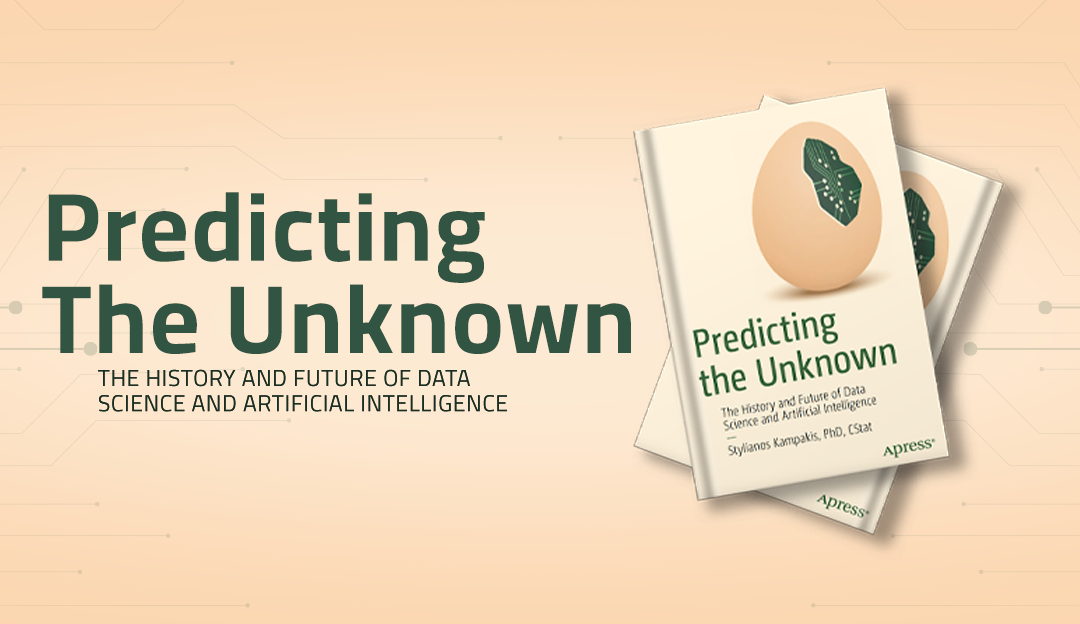
    Book Presentation: Predicting The Unknown -The History of AI & Data Science

    As the world increasingly embraces the data-driven era, uncertainty becomes an inevitable companion in the quest for knowledge and understanding. It is in the face of the unknown that true innovation flourishes, and ‘Predicting the Unknown‘ aims to be your guiding light in navigating these uncharted waters.

    In this book, you will embark on an extraordinary journey that will lead you through the intricate interplay between data science, machine learning, and AI. We will venture into the depths of data, exploring its hidden stories and patterns, and how it empowers us to make informed decisions in a complex world.

    Our CEO Dr. Stylianos Kampakis and author of the book recently held an event to discuss his latest release. You can watch it below:

    Get in touch if you’d like a free copy of the book.

    Basics Of Tokenomics with Dr. Hala Faissal

    We recently also held an event on Tokenomics which was a great success!

    Join Dr. Hala Faissal as she delves into the foundational principles of tokenomics, elucidating the intricacies of cryptocurrency tokens and their impact on the digital economy. Whether you’re a beginner or seeking a refresher, this video provides essential insights to navigate the world of tokenomics with confidence.

    Check it out below!

    Upcoming Event: AI Ethics for Decision Makers (6th Sep 2023)

    Join us at “AI Ethics for Decision Makers,” an exclusive online event tailored for leaders, policymakers, and professionals at the forefront of technological innovation.

    As AI continues to reshape our world, understanding the ethical implications is paramount. This engaging and interactive session will delve into the core principles of AI ethics, including fairness, transparency, accountability, and privacy.

    About the speaker:

    Raluca Crisan has 10+ years of experience in data science working with a variety of clients (UK retailers, banks & telco companies). She is Co-founder & CTO of Etiq, ML testing and data validation company and has a particular specialism in algorithmic bias.

    Grab your free tickets here.

  • Book Presentation: Predicting The Unknown -The History of AI & Data Science

    Book Presentation: Predicting The Unknown -The History of AI & Data Science

    It is with immense joy and a sense of accomplishment that I introduce you to “Predicting the Unknown – The History of AI and Data Science” – a book that has been a labor of love, passion, and unwavering dedication. As the author, I am honored to share this work with all of you, and I couldn’t be prouder of this moment.

    ‘Predicting the Unknown’ is more than just a book to me; it is the culmination of years of exploration, research, and a deep fascination with the enthralling world of data science, machine learning, and artificial intelligence. In these pages, I endeavor to unravel the enigmatic mysteries of uncertainty and offer a glimpse into the boundless possibilities that these cutting-edge fields hold for our future.

    As the world increasingly embraces the data-driven era, uncertainty becomes an inevitable companion in the quest for knowledge and understanding. It is in the face of the unknown that true innovation flourishes, and ‘Predicting the Unknown’ aims to be your guiding light in navigating these uncharted waters.

    In this book, you will embark on an extraordinary journey that will lead you through the intricate interplay between data science, machine learning, and AI. We will venture into the depths of data, exploring its hidden stories and patterns, and how it empowers us to make informed decisions in a complex world.

    Machine learning, the dynamic force behind modern-day breakthroughs, has the power to uncover hidden insights from data and make predictions that transform industries and revolutionize lives. In ‘Predicting the Unknown,’ we will delve into the fascinating world of machine learning algorithms and understand their immense potential to shape the future.

    Artificial intelligence, the frontier of innovation, has ceaselessly challenged the boundaries of human achievement. As we explore AI’s impact on society and daily life, we shall gain a deeper appreciation for its transformative capabilities and the ethical considerations that accompany its rapid advancement.

    This book is for the curious souls, the knowledge seekers, the dreamers, and the doers. Whether you are an aspiring data scientist, a seasoned AI enthusiast, or simply someone eager to grasp the profound impact of these technologies on our world, ‘Predicting the Unknown’ promises to enlighten and inspire.

    As you flip through the pages of ‘Predicting the Unknown,’ I hope you find yourself captivated by the possibilities that lie ahead. May this book ignite your curiosity, challenge your perspectives, and equip you with the tools to navigate the uncertainties of tomorrow with confidence and foresight.

    I’d also like to thank everyone who attended my recent book event which you can watch below.

    Thank you for joining me on this enlightening journey, and I sincerely hope “Predicting the Unknown – The History of AI and Data Science” becomes a cherished companion in your quest for knowledge and understanding.

    Here’s to embracing the future with open arms and to unlocking the secrets of uncertainty together!

  • The Tesseract Academy August Newsletter ๐Ÿค–๐ŸŒŸ Navigating the Ethical Frontier: AI’s Moral Compass

    The Tesseract Academy August Newsletter ๐Ÿค–๐ŸŒŸ Navigating the Ethical Frontier: AI’s Moral Compass

    A foreword by Dr Kampakis

    “The Tesseract Academy is helping decision makers and companies get ahead of the curve through AI and Web3.0. In this month’s newsletter we discuss AI Ethics as it is one of the major themes rising in AI and data science.

    In the next few years we will see new regulations coming into practice: The European Union’s Artificial Intelligence Act (AIA), The United States’ Algorithmic Accountability Act (AAA) and The UK’s Artificial Intelligence and Data Ethics Framework. Any company that is handling data will not only have to think about GDPR and data privacy, but also how this data is being used inside AI algorithms, and what effect these algorithms can have on users and society. We present to you a free AI framework to assist you against upcoming regulations, as well as with a free event on the same topic.”

    AI Ethics ensures responsible tech use, fosters trust, and promotes inclusivity. Ethical AI development also safeguards privacy, prevents misuse, and addresses societal impact. This creates responsible AI systems benefiting humanity and the planet.

    Here Are Some Key AI Ethics Considerations For Businesses:

    ๐ŸŒ Transparency: Understandable AI decisions

    ๐Ÿ‘ฅ Fairness: Bias-free outcomes

    ๐Ÿ”’ Security: Protect against exploitation

    Remember that AI ethics is an evolving field, and staying updated with the latest discussions and developments is crucial for making informed decisions.

    Get in touch if you need help in this area or why not attend our FREE event next month on this particular topic (details below).

    Upcoming Event: AI Ethics for Decision Makers (6th Sep 2023)

    Join us at “AI Ethics for Decision Makers,” an exclusive online event tailored for leaders, policymakers, and professionals at the forefront of technological innovation.

    As AI continues to reshape our world, understanding the ethical implications is paramount. This engaging and interactive session will delve into the core principles of AI ethics, including fairness, transparency, accountability, and privacy.

    About the speaker:

    No alt text provided for this image

    Raluca Crisan has 10+ years of experience in data science working with a variety of clients (UK retailers, banks & telco companies). She is Co-founder & CTO of Etiq, ML testing and data validation company and has a particular specialism in algorithmic bias.

    Grab your free tickets here.

    The Lean AI Ethics Framework

    This is a simple framework which can ensure that your organisation has nailed the fundamentals of AI ethics, irrespective of what current or future legislation will bring.

    This is a simple framework which can ensure that your organisation has nailed the fundamentals of AI ethics, irrespective of what current or future legislation will bring.

    This framework assumes that ethical use of AI concerns three main aspects:

    โ— Bias

    โ— Privacy and security

    โ— Accuracy

    Bias refers to those situations where a model might be unfairly treating certain

    individuals. For example, in a famous case, an algorithm called COMPAS had been used to make automated decisions on whether someone should be released from prison. This algorithm was biased against certain ethnicities and was later scrapped. This was an algorithm used in a sensitive domain, trained with biased data, which led to a very bad outcome for many individuals.

    Privacy and Security are topics which have traditionally been associated with the domain of data, but it has now started playing a larger role in machine learning models. There are certain ways that models can be manipulated by attackers in order to produce fraudulent results.

    Finally, Accuracy is important in those domains where the results of a model can have life-changing circumstances.

    No alt text provided for this image

    The free framework can be accessed here.

    AI for New Startups London Workshop Another Success! ๐Ÿ’ช

    Our CEO Dr. Stylianos Kampakis recently held a successful workshop at the Founders Factory in London. It was a great session where we had the chance to discuss a variety of topics such as AI for new startups, data management for entrepreneurs, and how to build an AI-driven company.

    No alt text provided for this image

    If you missed it, you can watch the online version here.

    Our next workshop is going to take place in a few months in London! Drop ๐Ÿ“ˆ Dr Stylianos Kampakis, CStat ๐Ÿ“Š a if you are a senior professional, or an entrepreneur and you want to take part in it!

    Survey: AI Readiness and Organisational Culture

    We’re thrilled to invite you to participate in our AI Readiness and Organizational Culture Survey! Your insights are like precious puzzle pieces that help us understand how organizations like yours are shaping their culture to embrace the power of AI.  

    ๐ŸŽ As a big thank you for your time and input, we’ll give you a FREE copy of Dr. Kampakis’ latest book ๐Ÿ“š “Predicting the Unknown: The history of data science and artificial intelligence”

    No alt text provided for this image

    This is your chance to explore the fascinating journey of AI and data science while making a positive impact on the industry’s future. 

    ๐ŸŒ Your opinion matters so help us, fill the short questionnaire here and get your free book now! Let’s dive deep into the dynamic relationship between AI and culture. 

    ๐ŸŒŸ Exciting News for Seasoned Professionals! Level up your career with our AI & Web3.0 Mastery Program! ๐Ÿค–๐Ÿ’ป

    The AI & Web3.0 Master Program is specifically designed for busy executives and decision makers.

    ๐Ÿ“š Get curated AI & Web3.0 insights through content, coaching, and live sessions.

    ๐Ÿ’ก Boost your tech-centric business career.

    ๐Ÿ’ฐ Fraction of the cost of traditional business schools.

    Join us for 12 months of dedicated support and a thriving community that embraces technology and career growth. Say goodbye to traditional MBA limitations!

    Book a free call with an expert to learn more.

  • The Tesseract Academy July Newsletter: Large Language Models and AI Transformation ๐Ÿค– (Free LLMs Advisory Consultation Offer)

    The Tesseract Academy July Newsletter: Large Language Models and AI Transformation ๐Ÿค– (Free LLMs Advisory Consultation Offer)

    The Tesseract Academy is helping decision makers and companies get ahead of the curve through AI and Web3.0. In this month’s newsletter we discuss our survey on LLMs and their impact on coding, our special offer for startups, as well as our in-person event in London for leaders interested in AI!

    ๐ŸŒŸ LLMs, such as GPT-4, are revolutionizing the field of Artificial Intelligence (AI) by their impressive language generation capabilities.

    Here’s a quick overview of how LLMs are contributing to AI transformation:

    ๐Ÿš€ Enhanced Natural Language Understanding: LLMs excel at understanding and generating human-like text, enabling better communication between machines and humans.

    โšก๏ธ Empowering Creative Applications: LLMs have been used to create innovative applications in various domains, including writing, art, music, and storytelling.

    ๐Ÿ’ก Amplifying Human Expertise: LLMs serve as powerful tools for experts, helping them analyze complex data, generate insights, and make informed decisions.

    We are offering an exclusive, tailor-made LLM advisory and building service for startups just like yours.

    Here’s what’s in store:

    โœ”๏ธ Bespoke LLM Advisory and Building Service: We will design an end-to-end strategy that’s meticulously tailored to your business needs. Our team of experts are ready to become your secret weapon in the competitive startup landscape.

    โœ”๏ธ Rapid 6-Week Turnaround: Your time is valuable. That’s why we’re committed to bringing your AI vision to life within a brisk 30-day timeframe.

    โœ”๏ธ Full Refund Guarantee: We stand by the quality of our work. If the results don’t meet your expectations, we’ll refund your investment. Your satisfaction isn’t just our goalโ€”it’s our promise.

    Sound enticing? ๐Ÿ“ž

    Then don’t hesitate โ€“ book a FREE consultation! ๐ŸŽ‰

    Check out what Daniel Rudis CEO of Digipal had to say about the LLM service we offer.

    Press Release: The Tesseract Academy Reveals Survey Results on Impact of ChatGPT and AI on Software and Coding Industry

    We recently conducted an executive survey on the expected impact and perceptions of LLMs on the software and coding industry.

    The report investigates how business professionals view and anticipate the disruptive potential of LLMs in the software and coding sector. The survey results show a range of attitudes towards the disruptive effects of Large Language Models (LLMs) on the software and coding industry, including anticipation, worry, and optimism.

    One interesting result was that 100% of those surveyed think that the combination of LLMs and no-code development will be beneficial for startups.

    Check out the full report here.

    Upcoming London Event: ๐ŸŒŸ Join us for The Business of AI London Workshop on 18th July! ๐ŸŽ‰๐Ÿ‘ฅ

    ๐Ÿ’ฅ Use discount code TESSERACT for 30% off! ๐Ÿ’ฅ

    This event is designed to help CEOs, managers, and professionals learn how to leverage AI to drive growth, improve efficiencies, and gain a competitive advantage.

    โœจ Topics Covered:

    โœ… ๐Ÿ“Š The role of data science in business strategy

    โœ… ๐Ÿค– The basics of AI and machine learning for businesses

    โœ… ๐Ÿ› ๏ธ Best practices for building an AI team

    โœ… ๐Ÿš€ How to get started with AI in your organization

    ๐ŸŽŸ๏ธ Limited Tickets! Only a few remaining! ๐ŸŽŸ๏ธ

    Check out what Bence K Csernak had to say about our workshop below!

    Don’t miss out on this exclusive opportunity! Secure your spot now!

    Spread the word and invite your colleagues!

    Let’s dive into the world of AI and drive business success together! ๐ŸŒŸ๐Ÿ”๐Ÿ’ผ

    Book your ticket here!

    (Don’t forget to use discount code TESSERACT for 30% off!) ๐Ÿ˜‰

  • The Tesseract Academy June Newsletter: ๐Ÿ’ก Why Product Managers Need to Jump on the AI/Data Science Train Right Now! ๐Ÿ’ก

    The Tesseract Academy June Newsletter: ๐Ÿ’ก Why Product Managers Need to Jump on the AI/Data Science Train Right Now! ๐Ÿ’ก

    ๐ŸŒŸ Product managers who embrace AI and data science ๐Ÿค๐Ÿ“Š๐Ÿ” can unlock a treasure trove of insights ๐Ÿ’ก๐Ÿ’Ž๐Ÿ”“, leading to smarter decisions, personalized experiences, and a competitive edge ๐Ÿš€๐Ÿ‘ฅ๐Ÿ’ช.

    โœ… Competitive Advantage: ๐Ÿš€

    • Gain a competitive edge in the market.
    • Better product decisions and improved customer experiences.
    • Early adopters stand out from the competition.

    โœ… Enhanced Decision-making: ๐Ÿค”๐Ÿ’ก

    • Valuable insights and analytics for data-driven decisions.
    • Analyze large datasets for informed choices.
    • Uncover patterns and trends for better strategies.

    โœ… Personalized Experiences: ๐Ÿ‘ฅโœจ

    • Deliver personalized experiences to users.
    • Tailor recommendations and content based on user data.
    • Increase user satisfaction and drive product success.

    โœ… Efficient Resource Allocation: โฐ๐Ÿ’ฐ

    • Optimize resource allocation in product development.
    • Identify areas for more efficient resource allocation.
    • Cost savings, improved productivity, and streamlined processes.

    โœ… Real-time Insights: โŒ›๐Ÿ“Š

    • Access real-time insights for agile decision-making.
    • Make quick adjustments to strategies.
    • Respond promptly to market changes.

    โœ… Improved Product Performance: ๐Ÿ“ˆ

    • Identify areas for improvement and optimize performance.
    • Enhance features based on user feedback and behavior.
    • Continuous iteration for improved product performance.

    โœ… Future-proofing: ๐Ÿ”ฎ

    • Prepare for the future by embracing AI and data science.
    • Adapt to emerging trends and remain relevant.
    • Stay ahead in the evolving tech landscape.

    By leveraging AI technologies, product managers can navigate the ever-changing tech landscape and future-proof their roles, ensuring long-term success ๐ŸŒŸ๐Ÿ”’๐Ÿ’ผ.

    So, don’t miss the opportunity to ride the AI wave and propel your products to new heights! ๐ŸŒŠ๐Ÿš€๐Ÿ“ˆ

    ๐Ÿ“ž Don’t hesitate โ€“ book a FREE call with a data expert now to discuss your needs! ๐ŸŽ‰

    Upcoming London Event: The Business of AI: Data science for CEOs, managers and professionals (18th July 2023)

    No alt text provided for this image

    This event is designed to help CEOs, managers, and professionals learn how to leverage AI to drive growth, improve efficiencies, and gain a competitive advantage.

    Topics covered include:

    • The role of data science in business strategy
    • The basics of AI and machine learning for businesses
    • Best practices for building an AI team
    • H ow to get started with AI in your organisation

    Join us for an engaging and informative day of learning, networking, and inspiration!

    Book your ticket here!

    Join Our New Telegram group!

    ๐Ÿš€ Ready to connect with like-minded individuals and stay ahead of the curve in the rapidly evolving fields of AI, data science, blockchain, and Web 3.0?

    ๐Ÿ” Whether you’re a beginner, intermediate, or advanced professional in these fields, The Tesseract Academy’s Telegram group is the perfect platform for you to:

    ๐Ÿ“ŒEngage with industry experts and leaders

    ๐Ÿ“ŒShare your knowledge and learn from others

    ๐Ÿ“ŒAccess free resources and educational materials

    ๐Ÿ“ŒGet exclusive insights and updates on the latest trends and breakthroughs

    Join now and become part of a vibrant community of professionals and enthusiasts passionate about AI, data science, blockchain, and Web 3.0!

    ๐Ÿ”— Click here to join

    Data science, AI, Blockchain and Tokenomics

    The Tesseract Academy specializes primarily in data science/AI and related themes (blockchain, software development, etc.):

    ๐Ÿค™ Reach out to us here if you are interested in our services that help decision-makers, no matter the stage of the evolution of their business

    ๐ŸŽ“ Our certificates and courses are designed for busy executives, decision makers and managers you can find them all here.

    ๐Ÿ“– We also have free frameworks are designed by experts for non-experts who want to learn how to utilise technologies like AI, data science and blockchain. 

    ๐Ÿ“… Finally, you can check out all our upcoming events that range from data science and AI for decision makers to product management and blockchain here.

    Get in touch if you have any questions.