
Incident Investigation When Automation Contributed
Understanding Automation’s Role in Safety Incidents
When automated systems contribute to incidents in transport and logistics operations, the investigation process requires special attention to how technology interfaces with human decision-making. Unlike traditional incidents where human error is the primary focus, automation-related incidents often involve complex interactions between machine behavior, system design, and operator response.
The investigation must examine not only what went wrong but also how the automated system influenced the sequence of events.
Consider a delivery driver operating a vehicle with an automated braking system that failed to activate during an emergency stop. The investigation must explore whether the system’s response was appropriate given the circumstances, whether the driver was properly trained to handle such situations, and whether the automation provided adequate warnings or feedback.
The incident may reveal that the automated system was designed to activate only under specific conditions that were not met in this particular scenario.
- Automated systems may not always respond as expected in edge cases or unusual circumstances
- Human operators might develop over-reliance on automated functions
- Communication between human operators and automated systems requires careful design
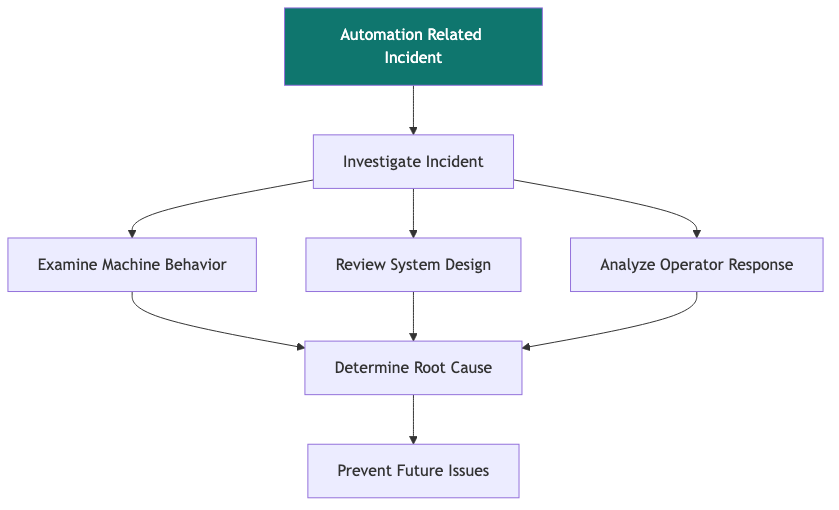
Investigation Methodology for Automated System Failures
The investigation approach must account for both technical and human factors when automation is involved. Technical analysis should examine system logs, software versions, maintenance records, and performance data. Human factors assessment must consider operator training, situational awareness, and response protocols.
The investigation team should include both technical specialists and operational personnel who understand the day-to-day use of these systems.
A practical example involves a warehouse robot that malfunctioned during a routine picking operation, causing damage to inventory and delaying shipments. The investigation revealed that the robot’s path planning algorithm had not been updated to account for recent changes in warehouse layout. The automated system was functioning correctly according to its programming but was operating with outdated data.
This highlights the importance of maintaining current system parameters and ensuring proper data management protocols.
Key elements of the investigation process include:
- Reviewing system documentation and configuration settings
- Analyzing data logs from the automated system
- Examining maintenance records and software updates
- Interviewing operators about their experience with the system
- Assessing whether proper training was provided
Learning and Improvement from Automation-Related Incidents
Incidents involving automation provide valuable opportunities to improve both systems and processes. The learning must focus on preventing similar occurrences through technical improvements, procedural changes, or enhanced training. The investigation findings should lead to specific recommendations that address the root causes identified.
For instance, an incident where an automated vehicle navigation system provided incorrect route information resulted in a delivery delay and customer dissatisfaction. The investigation revealed that the system had not been properly calibrated for local traffic conditions. The improvement measures included updating the navigation software, implementing regular calibration checks, and providing additional training for drivers on system limitations.
Organisations should develop specific protocols for investigating automation-related incidents that include:
- Clear procedures for data collection from automated systems
- Standardised approaches to assessing human-machine interaction
- Regular review cycles for system updates and improvements
- Communication protocols for sharing lessons learned
The final step involves implementing corrective actions and monitoring their effectiveness. This requires establishing metrics to measure improvements and ensuring that the changes address the underlying issues rather than merely treating symptoms. Regular review of similar incidents helps identify systemic problems that may affect multiple automated systems or processes.
Effective incident investigation in automated environments requires specialists who understand both technical systems and operational contexts. The process must maintain focus on practical improvements that enhance safety while preserving the benefits that automation provides. The goal is to learn from these incidents to make systems more reliable and operators better prepared to work alongside automated technologies.